
Navy-Strength Gin
A high-strength gin whose botanical expression may be concentrated, forceful and persistent. Juniper, citrus and spice can remain vivid after dilution. Higher alcohol is the defining threshold, however, and does not automatically establish greater botanical concentration or better quality.
Color
Maturation
Alcohol
Sweetness
Balance
History
The modern term Navy Strength has a more recent documentary history than gin’s relationship with naval life. In a 2013 interview, Plymouth master distiller Sean Harrison attributed the designation to Desmond Payne’s work on a 1993 bicentenary bottling. This is a useful distinction for training: historical naval supply and proof testing are background, while the familiar modern product label should not automatically be projected back several centuries. Drink Spirits: interview with Plymouth master distiller Sean Harrison.
Classic characteristics
Appearance
Usually clear and colourless unless wood or other treatment contributes colour.
Aroma
Often pronounced; juniper, citrus and spice, with recipe-dependent alternatives.
Flavor
Assertive botanical character and alcohol warmth; actual concentration varies.
Sweetness
Commonly dry to sweet-seeming; strength does not determine sugar content.
Mouthfeel
Often weighty or oily, with substantial warming sensation.
Finish
Frequently medium to long; distinguish persistent flavour from persistent alcohol heat.
Flavor Profile Deep Dive
Compare at documented strength with a separate diluted portion; intensity and heat should not be mistaken for complexity. Investigate persistent unpleasant solvent-like, stale or sulfurous character in context. Do not diagnose a specific production error from one aroma; appropriate fermentation character and proof-related warmth are not automatic faults.
Service notes
Compare a producer's standard and navy-strength versions where the recipe relationship is documented. Record impressions neat, then with controlled dilution, noting how aroma and texture change. Do not assume that an equal-volume substitution leaves a cocktail unchanged: both alcohol contribution and botanical balance may shift. For consumers, state the actual strength and describe its intended presentation. Staff should be able to explain why a small change in pour or dilution can matter without implying that high proof is a quality award.
Style parameters
| Parameter | Boundary or expectation |
|---|---|
| Base material | Agricultural spirit with juniper and other botanicals |
| Bottled strength | ADI minimum 57% ABV; record the bottle's exact strength. |
| United States: bottled ABV | at least 40%; see identity requirements. |
| European Union: bottled ABV | at least 37.5%; see identity requirements. |
| Color and clarity | Usually clear and colourless unless wood or other treatment contributes colour. |
| Maturation | Optional and independent of the navy-strength designation. |
| Additions | Follow the underlying gin subtype and documented formulation. |
Legal limits apply only to the named jurisdiction and identity. ADI entry conditions and typical sensory expectations are separate; a product example is not a universal range.
Cocktail connections
Style comparison
This entry is separated by bottling strength rather than a mandatory botanical recipe. A high-strength classic gin can fit both rows, and a lower-strength gin with intense juniper does not qualify here. The category does not require a particular country, naval affiliation or production scale under ADI's supplied definition.
Ingredients
Agricultural spirit with juniper and other botanicals
Production notes
ADI defines this entry as gin bottled at or above 57% ABV. Botanical recipe, distillation and maturation can otherwise vary. Navy strength is therefore compatible with classic, contemporary or aged profiles. Historical naming should not be allowed to replace the measurable strength criterion used for this guide.
Commercial examples
Retained example and source context. Plymouth Navy Strength documents 57% ABV and a juniper/citrus profile supported by cardamom and orange. ADI supplies the threshold. The producer's historical narrative is not needed to establish category eligibility.
Photo credit
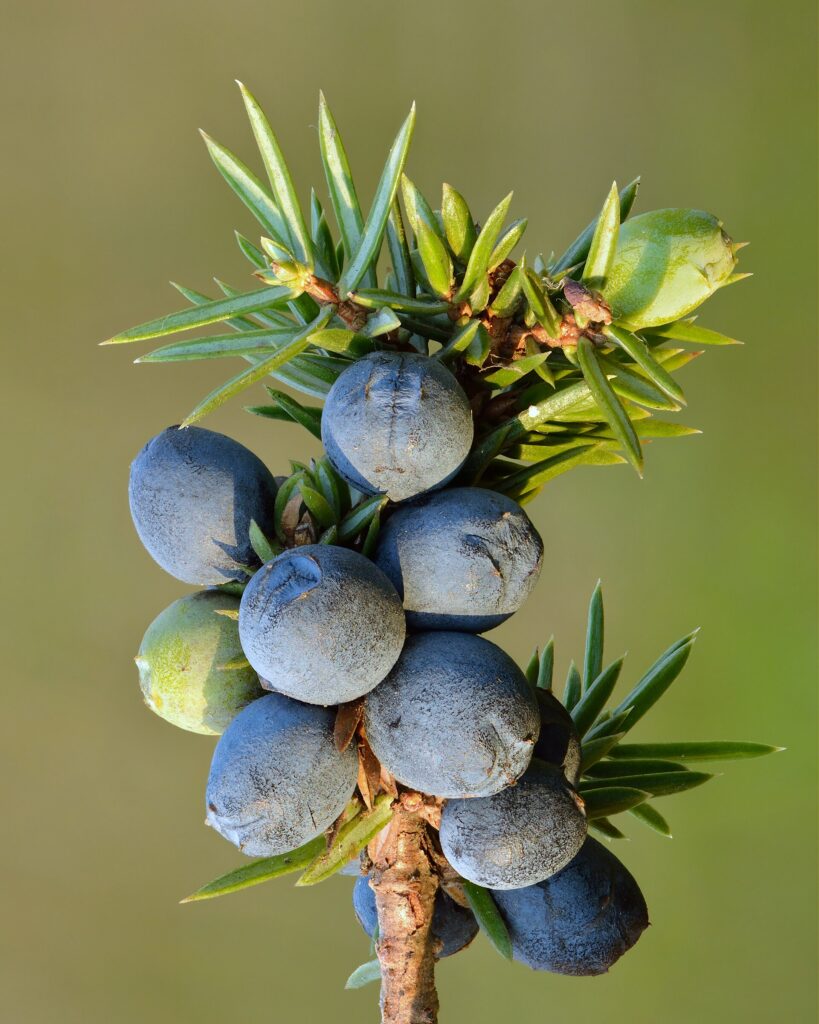
Ingredient or production reference: Juniper berries, the defining gin botanical. This photograph illustrates the raw material or process, not a bottle of this specific style. Photo: Ivar Leidus / Wikimedia Commons. CC BY-SA 4.0. Display resized; no other edits.

Keep exploring
- EU Regulation 2019/787 — evidence reviewed 2026-09-17.
- 27 CFR 5.144 — evidence reviewed 2026-09-17.