
Miske
An Ecuadorian agave-sap spirit that can show grassy, plant-derived and gently fruity character, often with a rounded texture. It provides a useful counterpoint to heart-cooked agave distillates and should be presented as a distinct tradition rather than an Ecuadorian version of tequila.
Color
Maturation
Alcohol
Sweetness
Balance
History
Miske’s recent history centers on the recognition of Ecuadorian agave-spirit production and the communities sustaining it. Ecuador’s intellectual-property authority announced Miske as the country’s seventh denomination of origin in October 2022. This provides a firm modern milestone. Older traditions of collecting and fermenting agave sap are relevant background, but should not be used on their own to claim an equally old history for the distilled spirit. SENADI: recognition of Miske as an Ecuadorian denomination of origin.
Classic characteristics
Appearance
Clear and colourless for blanco; wood contact may produce gold or pinkish tones.
Aroma
Often medium; grassy, vegetal and lightly fruity, with wood notes when matured.
Flavor
Fresh plant character; barrel-treated expressions may introduce spice or wine-associated notes.
Sweetness
Dry to sweet-seeming; sap's original sugar does not establish finished residual sugar.
Mouthfeel
Rounded or creamy impressions are possible without dairy ingredients.
Finish
Variable length; evaluate persistence of plant character and any maturation contribution.
Flavor Profile Deep Dive
Assess sap-derived character and any documented wood influence; Mexican tequila aging names do not establish Miske limits. Investigate persistent unpleasant solvent-like, stale or sulfurous character in context. Do not diagnose a specific production error from one aroma; appropriate fermentation character and proof-related warmth are not automatic faults.
Service notes
Taste an unaged expression before a wood-treated version from the same producer. Record which plant and texture impressions remain recognizable and which notes appear only after maturation. Ask staff to distinguish a creamy sensation from an actual cream ingredient. For consumers, a short explanation of sap collection makes the style understandable without requiring botanical expertise. In mixed drinks, evaluate the individual expression's intensity and weight before treating it as an interchangeable substitute for another agave spirit.
Style parameters
| Parameter | Boundary or expectation |
|---|---|
| Base material | Fermented agave sap (tzawarmishky) |
| Bottled strength | Chawar's cited expressions are 40%; no universal legal range is asserted here. |
| Color and clarity | Clear and colourless for blanco; wood contact may produce gold or pinkish tones. |
| Maturation | Blanco and wood-treated expressions documented; check the maker's actual practice. |
| Additions | Verify formulation; do not assume sweetness or colour proves an addition. |
Legal limits apply only to the named jurisdiction and identity. ADI entry conditions and typical sensory expectations are separate; a product example is not a universal range.
Cocktail connections
Browse published cocktails. Documented recipes, conditional style choices and development substitutions are labeled separately.
No established classic or recognized modern cocktail match was found for this specific style in the sources reviewed. This records a research gap, not proof that no cocktail exists. No neighboring style has been substituted to fill the space.
Style comparison
Sap collection, Ecuadorian origin and the protected identity provide the main distinction. Comiteco offers a useful comparison because it also uses agave sap, but its cane-sugar tradition and Mexican geographical indication are separate. Neither spirit should be described using assumptions derived from roasted agave hearts.
Ingredients
Fermented agave sap (tzawarmishky)
Production notes
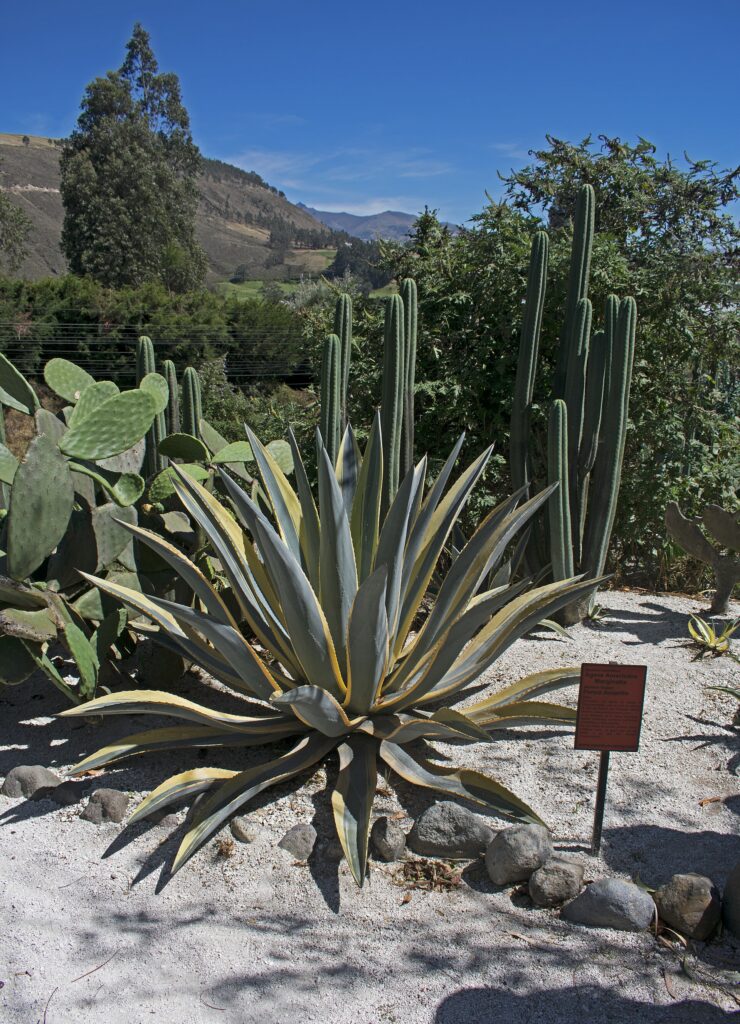
Ecuador recognized Miske as a denomination of origin in 2022. Its production begins with tzawarmishky, the collected sap of mature agave, followed by fermentation and distillation. Chawar documents Agave americana and a cooperative sap supply. Wood-treated expressions exist, but their commercial age descriptions should not automatically inherit Mexican tequila thresholds.
Commercial examples
No newly verified benchmark is designated in this revision. The original example discussion below remains a research lead, with its original qualifications.
Retained example and source context. Ecuador's recognition notice; Chawar production and expressions.
Photo credit
Ingredient or production reference: Agave americana at Museo Solar in Cayambe, Ecuador. This photograph illustrates the raw material or process, not a bottle of this specific style. Photo: Ymblanter / Wikimedia Commons. CC BY-SA 4.0. Display resized; no other edits.
