
Japanese Whisky
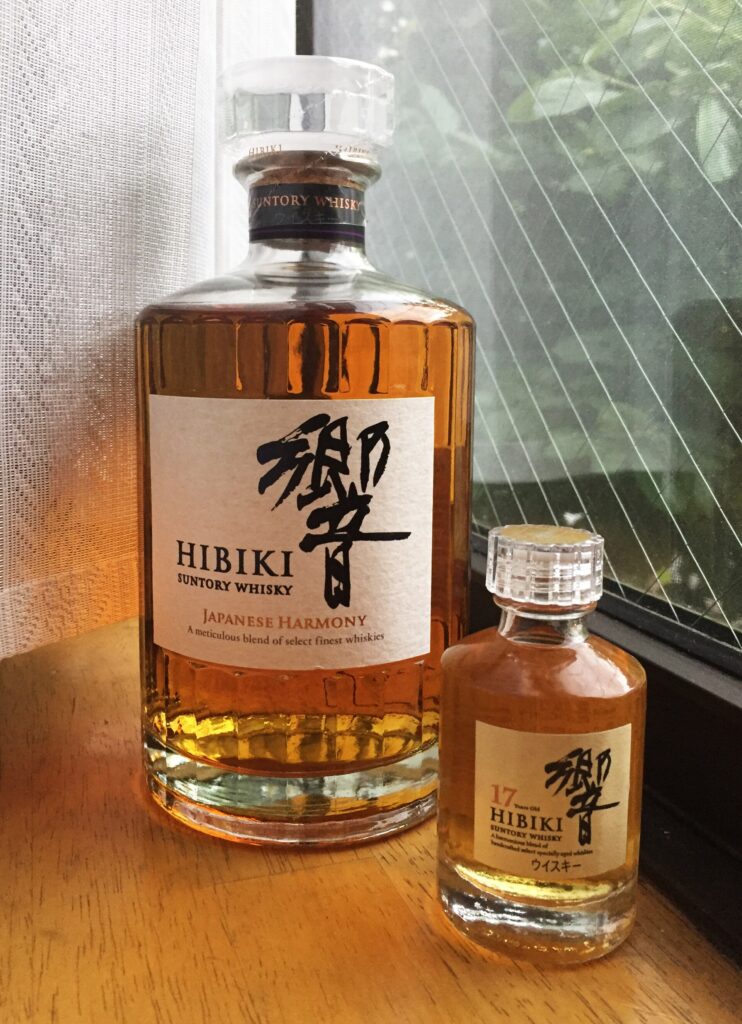
A diverse whisky family including single malts, grain whiskies and blends, with profiles from delicate flowers and fruit to substantial malt, oak and smoke. Precision and balance are useful assessment goals, but “Japanese” does not prescribe softness, absence of peat or maturation in Japanese oak.
Color
Maturation
Alcohol
Sweetness
Balance
History
Japanese whisky’s industrial beginnings are closely associated with Shinjiro Torii and Masataka Taketsuru. Taketsuru studied distilling in Scotland after traveling there in 1918; Torii began the Yamazaki project in 1923, with production following in 1924. Taketsuru later established his own venture at Yoichi in 1934. Separating construction, first production and company founding avoids turning these related milestones into contradictory “first whisky” dates. House of Suntory: company and whisky chronology; Nikka: Masataka Taketsuru biography.
Classic characteristics
Appearance
Pale gold through amber; cask choice and permitted plain caramel influence colour.
Aroma
Light to pronounced floral, cereal, fruit, vanilla, spice or smoke according to whisky type.
Flavor
Delicate to concentrated; malt, grain and cask character vary, with peat optional.
Sweetness
Usually dry with sweet-associated fruit and oak impressions; distinguish colouring from sweetening.
Mouthfeel
Light and silky to full and oily; blending and strength shape the finished impression.
Finish
Short to long, preferably coherent with the whisky's intended weight and intensity.
Flavor Profile Deep Dive
Use the cited JSLMA standard and documented bottling; Japanese branding or ownership alone does not prove production origin. Investigate persistent solvent-like pungency, unpleasant stale character or wood astringency that overwhelms the intended expression. A descriptor alone cannot prove a distillation-cut error, additive use or chemical safety.
Service notes
Verify the producer's compliance statement and whisky type before teaching the origin story. Compare neat and in a measured highball, noting how carbonation and dilution alter aroma and texture. Explain a restrained or smoky profile as a feature of the bottle, not a national rule. Avoid using high price or a Japanese label as evidence of maturity, authenticity or quality.
Style parameters
| Parameter | Boundary or expectation |
|---|---|
| Base material | Fermented grain mash; identify grain and component types |
| Bottled strength | Association minimum 40% ABV; check the specific release and destination label. |
| Japan — JSLMA association standard: bottled ABV | at least 40%; see identity requirements. |
| Color and clarity | Pale gold through amber; cask choice and permitted plain caramel influence colour. |
| Maturation | Association minimum three years in Japan; Japanese oak is not required. |
| Additions | Plain caramel colouring is allowed under the cited association standard. |
Legal limits apply only to the named jurisdiction and identity. ADI entry conditions and typical sensory expectations are separate; a product example is not a universal range.
Cocktail connections
Style comparison
Japanese imagery or Japanese bottling alone does not prove conformity with the association's origin requirements. A world blend containing imported whisky is a different proposition even if sold by a respected Japanese producer. Mizunara oak is a particular cask choice, not a defining ingredient for every Japanese whisky. Single malt and blended expressions should be compared with their proper counterparts.
Related styles: International Single Malt Whisky · Scottish Blended Whisky.
Ingredients
Fermented grain mash; identify grain and component types
Production notes
ADI refers to the Japan Spirits & Liqueurs Makers Association standard. It requires malted grain, permits other cereals, and requires Japanese water, saccharification, fermentation and distillation in Japan below 95% ABV. Maturation must occur in Japan for at least three years in wooden casks no larger than 700 litres, followed by Japanese bottling at no less than 40%. This is an industry association standard, fully effective after its transition ended March 31, 2024; it should not be represented as a comprehensive national statute governing every seller.
Commercial examples
No newly verified benchmark is designated in this revision. The original example discussion below remains a research lead, with its original qualifications.
Retained example and source context. Hibiki Japanese Harmony illustrates the blended field. JSLMA standard; 2025 certification-mark announcement. ADI scope: S119.
Photo credit
Hibiki Japanese Harmony whisky. Photo: ウィキ太郎 (Wiki Taro) / Wikimedia Commons. Public domain. Display resized; no other edits.

Keep exploring
- JSLMA Japanese whisky labeling standard — evidence reviewed 2026-09-17.