
Italian Pilsner | Birra D`Oro
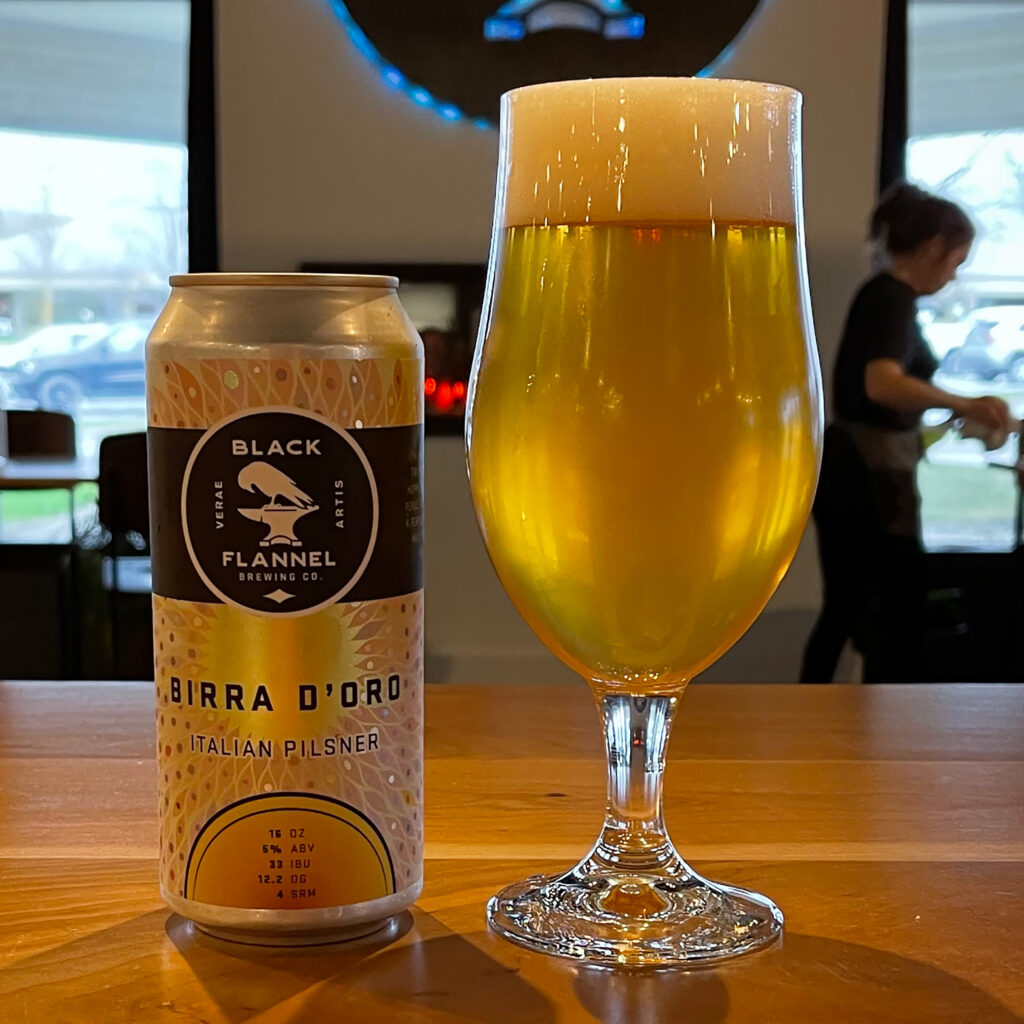
A crisp, dry pilsner featuring prominent late-addition or dry-hop character using aromatic European noble hops, blending traditional German brewing precision with modern dry-hopping techniques.
Color
Bitterness
Alcohol
Sweetness
Balance
History
Historical Development
In our post on Czech Premium Pale Lager, we went through the story that began the worldwide pale lager boom. In more recent years, the Italian Pilsner was developed to be a version of a Pilsner that bridges the gap between a traditional German Pilsner and a North American dry-hopped IPA. That's essentially what it is; a dry-hopped German Pilsner.
Modern Evolution
The Italian Pilsner originated in 1996 when brewer Agostino Arioli of Birrificio Italiano near Como, Italy, attempted to brew a traditional German-style pilsner. Feeling the result strayed from the classic profile, he named the beer "Tipopils" (meaning "kind of pils") and introduced an English-inspired cask dry-hopping technique using European noble hops. This unfiltered, dry-hopped lager gained international attention when American brewers, notably Matt Brynildson of Firestone Walker, encountered Tipopils in Europe and used it as the inspiration for popular U.S. craft lagers like Pivo Pils, cementing the style globally.
Classic characteristics
Appearance
Pale
Aroma
Crisp, crackery malt. Complex floral and spicy hop bouquet.
Flavor
Balanced toward hops
Pleasant lingering bitterness
Mouthfeel
- ABV: 4.8% – 5.5%
- Body: Medium to Full
- Carbonation: Medium to High
- Finish: Balanced to Dry
Flavor Profile Deep Dive
Service notes
BJCP designation
Brewers Association designation
Style comparison
Parent Categories
Lighter in body and color, drier, crisper, and more fully attenuated, with more of a lingering bitterness, and with higher carbonation than a Czech Premium Pale Lager. More hop character, malt flavor, and bitterness than International Pale Lagers. More hop character and bitterness with a drier, crisper finish than a Munich Helles; the Helles has more malt flavor, but of the same character as the Pils.
Variant Styles
Ingredients
Grain Bill
- Traditionally made only with German pilsner malt
- Blend of German Hops
- German lager yeast
Brewing process
Mash Profile
Decoction brewing is a hallmark of traditional German Pilsners. Instead of mixing hot water with malt and then letting it rest at a single temperature, brewers begin the mash at lower temperatures, then pull a portion of the mash and boil it (see this post on why we decoct for more info on this). The boiled portion is then added back to the main mash, and the whole process is repeated twice before the wort is drained into the kettle and boiled with hops. The finished wort is chilled and fermented cool with a lager yeast, then held at lagering temperature (usually around 32F) for several weeks to clarify, soften, and round the flavors together.
Food pairings
At the pub: Pretzel with pub mustard
Also at the pub: Smash Burger with Thrice Cooked Chips
Takeout: Pad Thai
Desserts
Spirit pairings
Cognac
Gin (barrel-aged too!)
The soundtrack
New: Chris Thile and Edgar Meyer, Bass & Mandolin
Old: Bach, The Brandenburg Concertos
Keep exploring
- Beer Judge Certification Program: BJCP Official Guidelines
- Brewer's Association: BA Beer Style Guidelines