
Irish Single Pot-Still Whiskey
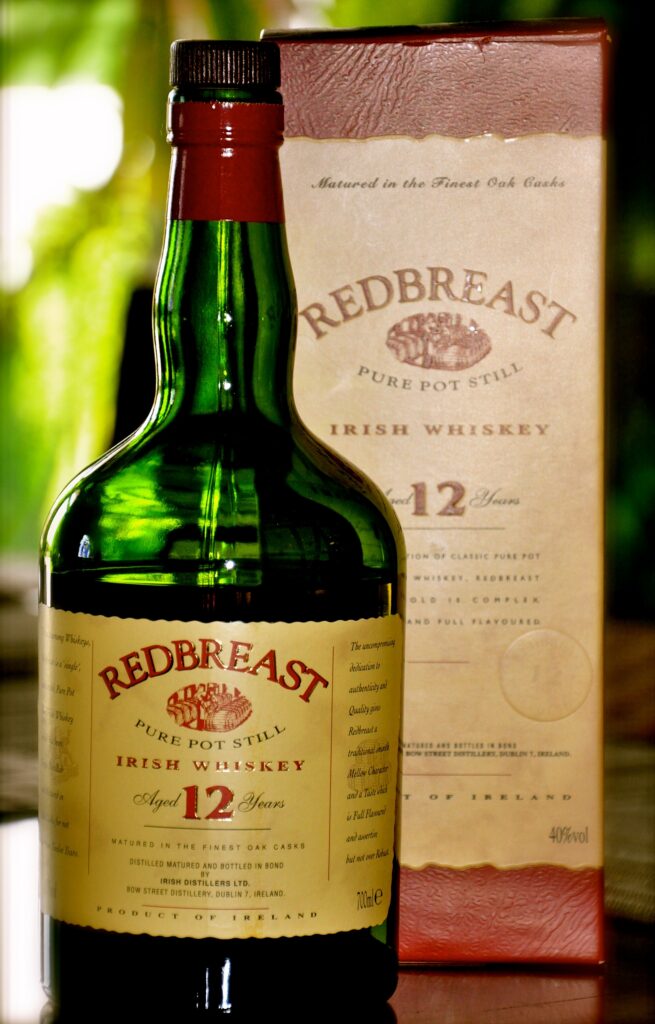
An Irish whiskey associated with rounded or oily texture, lively spice, fruit and a combination of malted- and unmalted-barley character. Oak can add vanilla, nuts and dried fruit. The style's appeal often lies in the way creamy weight and energetic spice coexist rather than in maximum sweetness or smoke.
Color
Maturation
Alcohol
Sweetness
Balance
History
Irish single pot-still whiskey’s commercial heritage is illustrated by the relationship between distillers and wine merchants who selected and matured whiskey. Redbreast traces its story through Gilbey’s nineteenth-century whiskey business and identifies the Redbreast name in 1912. This documents one route by which pot-still whiskey acquired a lasting bottled identity. It is firmer history than claiming that the entire style was suddenly invented in response to one tax. Redbreast: Gilbey’s and brand history.
Classic characteristics
Appearance
Gold through deep amber; cask history and permitted colour adjustment can affect shade.
Aroma
Medium to pronounced cereal, fruit, nuts, vanilla and lively spice; dried fruit may reflect cask choice.
Flavor
Barley character with peppery or baking-spice impressions, fruit and integrated wood.
Sweetness
Dry with sweet-associated fruit and oak aromas; creaminess is a texture, not proof of sugar.
Mouthfeel
Often rounded, creamy or oily, with spice and tannin supplying contrast; not a compulsory measured viscosity.
Finish
Medium to long, frequently carrying spice, cereal, fruit and gentle wood warmth.
Flavor Profile Deep Dive
Assess the malted/unmalted-grain expression and texture; proposed cereal-rule changes do not define current sample eligibility. Investigate persistent solvent-like pungency, unpleasant stale character or wood astringency that overwhelms the intended expression. A descriptor alone cannot prove a distillation-cut error, additive use or chemical safety.
Service notes
Compare a documented single pot still with a single malt, recording grain identity before tasting but assessing the samples without forcing expected descriptors. Note how water changes oily weight, fruit and spice. Staff should explain the malted/unmalted distinction in one clear sentence, then describe the bottle's actual flavour. Avoid assigning a hidden mash percentage from sensory impressions or repeating proposed regulatory changes as settled law.
Style parameters
| Parameter | Boundary or expectation |
|---|---|
| Base material | Malted and unmalted barley; other cereals within published specification |
| Bottled strength | IR applies; standard-strength and stronger releases should be assessed on their own terms. |
| Ireland, island of: bottled ABV | at least 40%; see identity requirements. |
| United States: bottled ABV | at least 40%; Whiskey identity; protected origin and named types have additional rules. |
| Color and clarity | Gold through deep amber; cask history and permitted colour adjustment can affect shade. |
| Maturation | IR applies; producer-specific cask regimes should be identified separately. |
| Additions | IR applies; “pot still” does not justify claims about undisclosed production details. |
Legal limits apply only to the named jurisdiction and identity. ADI entry conditions and typical sensory expectations are separate; a product example is not a universal range.
Cocktail connections
Style comparison
Unmalted barley is part of the identity, whereas Irish single malt uses malted barley exclusively. A pot-distilled bourbon, brandy or malt whiskey is not therefore an Irish single pot-still whiskey. The flavour range also extends beyond any one established brand. Richness, spice and texture are useful teaching expectations, not a requirement that every sample show an identical creamy or peppery note.
Related styles: Irish Single Malt Whiskey · Irish Blended Whiskey.
Ingredients
Malted and unmalted barley; other cereals within published specification
Production notes
This is a defined Irish whiskey type, not a generic term for anything made in a pot still. The Irish whiskey specification gives the published cereal requirements and one-distillery meaning of “single.” The recipe and still operation distinguish it from single malt. Triple distillation is traditional in important examples but should not be treated as the exclusive permitted method. The 2026 review makes it particularly important to distinguish the published cereal limits from proposed changes.
Commercial examples
Retained example and source context. Redbreast 12 Year Old is a documented single-pot-still reference. ADI scope: S118; the Irish whiskey specification.
Photo credit
Redbreast 12 Year Old single pot still Irish whiskey. Photo: Tasma3197 / Wikimedia Commons. CC BY-SA 3.0. Display resized; no other edits.

Keep exploring
- Published Irish whiskey specification; consultation distinguished from adoption — evidence reviewed 2026-09-17.
- 27 CFR 5.143 — evidence reviewed 2026-09-18.