
Irish Grain Whiskey
Irish whiskey with a grain-based, column-distilled foundation, often showing cereal, vanilla, light fruit and a relatively gentle texture. Mature or actively casked examples can be much more concentrated, with red fruit, spice and tannin. Grain whiskey is not necessarily neutral, simple or intended only for blending.
Color
Maturation
Alcohol
Sweetness
Balance
History
Irish grain whiskey’s history is tied to the development of continuous distillation, including Aeneas Coffey’s nineteenth-century work. The Irish Whiskey technical file describes the technological and industrial changes that shaped the category alongside pot-still production. Grain whiskey therefore belongs to a particular production history within Irish whiskey, rather than being merely a recent diluted form of malt. Its commercial roles have included blending as well as separately presented bottlings. Irish Whiskey technical file: historical development.
Classic characteristics
Appearance
Pale gold to amber; active wine casks or long maturation may produce deeper colour.
Aroma
Light to pronounced cereal, vanilla, flowers and fruit; cask-derived berries or spice may dominate some expressions.
Flavor
Gentle grain through richer fruit and oak, with a defined progression rather than a fixed level of intensity.
Sweetness
Dry but often sweet-seeming from vanilla and cereal; no sweetening under IR.
Mouthfeel
Light and silky to rounded or creamy; tannin can add grip in wine-cask examples.
Finish
Short to long, with cereal, fruit and wood in proportion to the style.
Flavor Profile Deep Dive
Assess grain expression and cask structure; the single-distillery qualifier must be documented rather than inferred from the heading. Investigate persistent solvent-like pungency, unpleasant stale character or wood astringency that overwhelms the intended expression. A descriptor alone cannot prove a distillation-cut error, additive use or chemical safety.
Service notes
Compare a documented wine-cask grain whiskey with a more restrained cask treatment where available. Ask whether the fruit seems fresh, dried or wine-associated and how tannin changes after dilution. Explain the grain recipe only from producer evidence; do not infer corn percentage from a sweet taste. Restaurant staff should describe the actual bottle's weight and flavour rather than automatically offering it as a neutral substitute for single malt.
Style parameters
| Parameter | Boundary or expectation |
|---|---|
| Base material | Fermented grain mash; identify grain and component types |
| Bottled strength | IR applies; higher strength does not change grain whiskey into another production type. |
| Ireland, island of: bottled ABV | at least 40%; see identity requirements. |
| United States: bottled ABV | at least 40%; Whiskey identity; protected origin and named types have additional rules. |
| Color and clarity | Pale gold to amber; active wine casks or long maturation may produce deeper colour. |
| Maturation | IR applies; cask history can substantially alter an otherwise restrained distillate. |
| Additions | IR applies; finished-whiskey character is not evidence of added fruit flavour. |
Legal limits apply only to the named jurisdiction and identity. ADI entry conditions and typical sensory expectations are separate; a product example is not a universal range.
Cocktail connections
Style comparison
Single grain is a distillery statement, not a promise that only one cereal was used. The column method separates the published Irish grain definition from the pot-distilled malt and pot-still categories. High rectification often reduces some raw-material intensity, but it does not preclude complexity from fermentation, distillation choices and maturation. A grain whisky from another country may follow different rules.
Related styles: Irish Single Malt Whiskey · Irish Blended Whiskey.
Ingredients
Fermented grain mash; identify grain and component types
Production notes
The published composition and column-distillation requirements are summarized in the Irish whiskey specification, including the cereal limit currently under review. The ADI heading does not require “single”; use that qualifier only when the whiskey comes from one distillery. Corn, wheat and other allowed cereals can influence the mash, while distillation and maturation strongly shape what survives into the bottle. A grain whiskey can contain malted barley without becoming Irish malt whiskey.
Commercial examples
Retained example and source context. Teeling Single Grain, 46%, documents a 95% corn, 5% malted-barley mash and American red-wine casks. ADI scope: S116; the Irish whiskey specification.
Photo credit
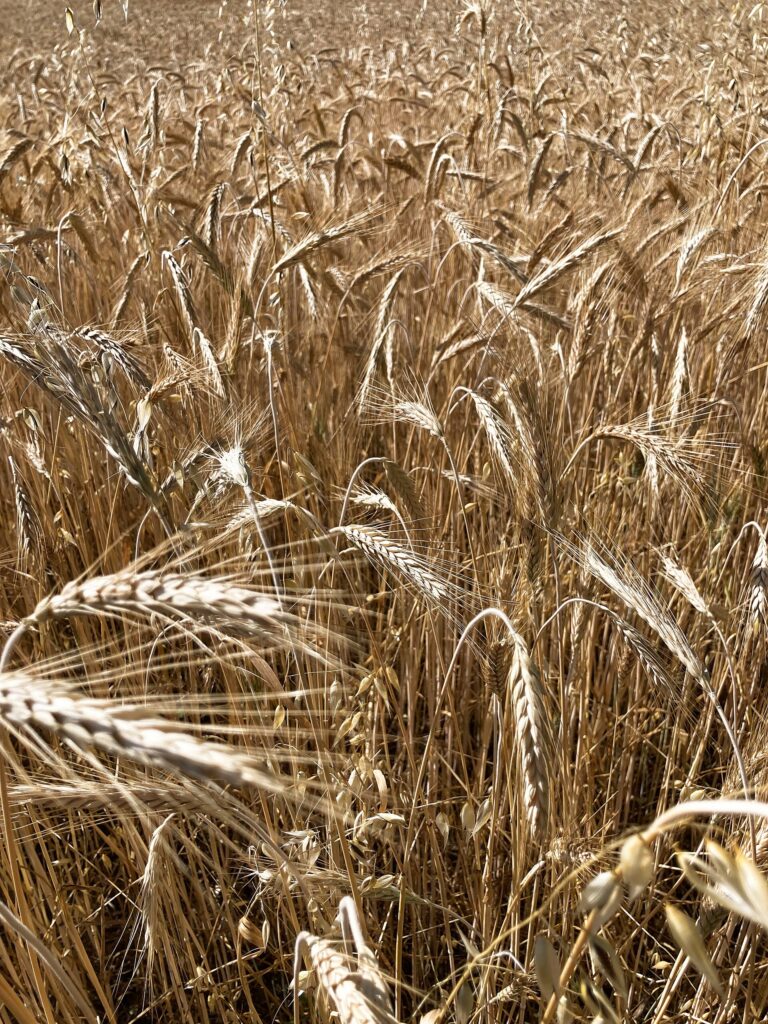
Ingredient or production reference: Wheat growing in a field, a grain-whiskey raw material. This photograph illustrates the raw material or process, not a bottle of this specific style. Photo: Michele Castagnetti / Wikimedia Commons. CC BY-SA 4.0. Display resized; no other edits.

Keep exploring
- Published Irish whiskey specification; consultation distinguished from adoption — evidence reviewed 2026-09-17.
- 27 CFR 5.143 — evidence reviewed 2026-09-18.