
International Grain Whisky
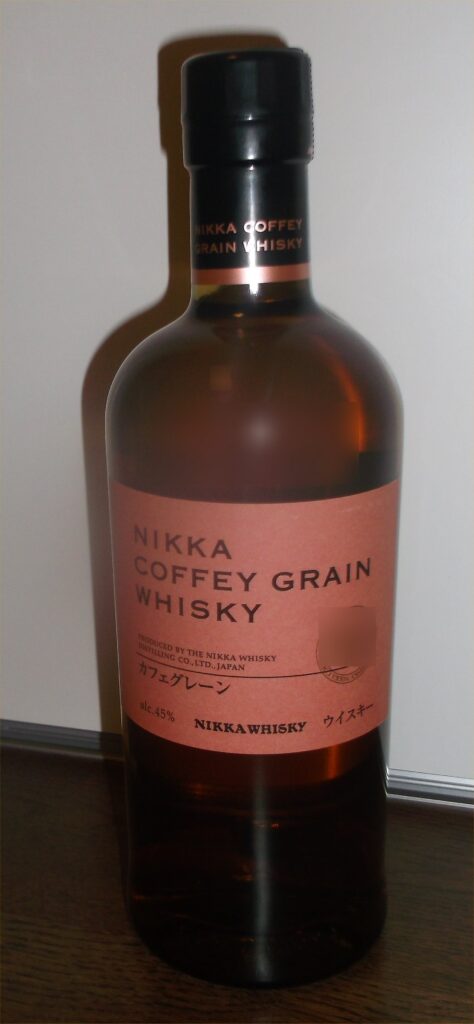
A broad family of wood-stored grain whiskies whose flavour may be delicate and vanilla-led or distinctly cereal-driven, fruity and spicy. Rectification, grain selection and cask treatment can produce greater variation than the word “grain” suggests. The entry is not a quality tier beneath single malt.
Color
Maturation
Alcohol
Sweetness
Balance
History
International Grain Whisky is a broad geographic category whose history depends on particular industries and distilleries. Nikka’s introduction of Coffey stills in 1963 supplies a documented Japanese milestone in the adoption of equipment associated with grain-spirit production. This illustrates the international transmission of distilling technology. It does not establish the origin of all grain whisky, or imply that every product from a Coffey still belongs to the same modern legal category. Nikka: historical chronology.
Classic characteristics
Appearance
Pale gold to dark amber; cask type and duration can produce substantial variation.
Aroma
Light to pronounced cereal, vanilla, fruit, nuts and wood spice; highly rectified examples can be restrained.
Flavor
Delicate to full grain expression with variable oak contribution; intensity is not fixed by column distillation alone.
Sweetness
Commonly dry to sweet-seeming; vanilla and corn aromas do not establish added sugar.
Mouthfeel
Light and silky to creamy or oily; wood tannin can add grip in mature examples.
Finish
Short to long; balance should suit the actual concentration and intended style.
Flavor Profile Deep Dive
Use the actual national grain-whisky definition and maturation; a generic umbrella cannot supply one mandatory flavor intensity. Investigate persistent solvent-like pungency, unpleasant stale character or wood astringency that overwhelms the intended expression. A descriptor alone cannot prove a distillation-cut error, additive use or chemical safety.
Service notes
Build comparisons around known production variables: grain, distillation method, cask and age. A lightly flavoured example and a mature cask-driven one make a better lesson than treating every grain whisky as interchangeable. Staff should explain a bottle's observed character without assuming that a pale colour means youth or that a column still proves neutrality. Obtain an origin-specific specification before using this umbrella as a compliance description.
Style parameters
| Parameter | Boundary or expectation |
|---|---|
| Base material | Fermented grain mash; identify grain and component types |
| Bottled strength | ADI minimum 40% ABV; production distillation remains below its stated 95% threshold. |
| Color and clarity | Pale gold to dark amber; cask type and duration can produce substantial variation. |
| Maturation | Wooden barrels required by ADI; origin-country rules determine further requirements. |
| Additions | Verify local permissions and actual treatment; no worldwide additive rule follows from this name. |
Legal limits apply only to the named jurisdiction and identity. ADI entry conditions and typical sensory expectations are separate; a product example is not a universal range.
Cocktail connections
Browse published cocktails. Documented recipes, conditional style choices and development substitutions are labeled separately.
No established classic or recognized modern cocktail match was found for this specific style in the sources reviewed. This records a research gap, not proof that no cocktail exists. No neighboring style has been substituted to fill the space.
Style comparison
“Single grain,” where legally used, normally concerns one distillery rather than an absolute one-grain recipe; this ADI heading does not even require that qualifier. High distillation strength can reduce some grain-derived character without removing the possibility of mature complexity. Grain whisky is also different from grain neutral spirit stored in wood when the original distillation threshold fails the whisky definition.
Related styles: Indian Single Grain Whisky · Scottish Grain Whisky.
Ingredients
Fermented grain mash; identify grain and component types
Production notes
ADI specifies a fermented grain mash, distillation below 95% ABV, wooden-barrel storage and bottling at least 40%. Its wording does not require one distillery, one grain or a particular still design. Origin-country rules may impose tighter definitions, maturation periods or wood restrictions. Because the supplied definition is broad enough to overlap other whisky entries, classification should follow the declared ADI category and documented production rather than an invented worldwide grain-whisky law.
Commercial examples
No newly verified benchmark is designated in this revision. Select a documented qualifying expression before running a benchmark tasting.
Retained example and source context. ADI supplied definition: S113. Teeling's grain-whiskey production disclosure provides a comparative process reference; its Irish identity is covered separately at S116, not reassigned here.
Photo credit
Nikka Coffey Grain whisky. Photo: Kentin / Wikimedia Commons. CC BY-SA 4.0. Display resized; no other edits.
