
Indian Single Grain Whisky
A grain whisky from one Indian distillery, with potential character ranging from delicate cereal and vanilla to fuller fruit, spice and mature wood. This is a production identity rather than a settled narrow sensory style. Its profile must be interpreted through the actual grain, distillation and maturation choices.
Color
Maturation
Alcohol
Sweetness
Balance
History
Indian single-grain whisky’s recent premium development is illustrated by Diageo India’s Epitome Reserve rice whisky, introduced in 2021. The product provided a named commercial example centered on grain identity rather than the better-known malt category. That launch is a documented milestone, not evidence that grain whisky production in India began that year. Its importance is the deliberate presentation of a distinct Indian grain-whisky expression. Diageo India: Epitome Reserve.
Classic characteristics
Appearance
Pale gold through amber if wood-matured; establish the actual process before treating shade as typical.
Aroma
Light to pronounced cereal, fruit, vanilla or oak; grain and rectification determine the starting intensity.
Flavor
Restrained to expressive grain character with any maturation-derived spice and wood; no mandatory flavour marker established.
Sweetness
Dry to sweet-seeming; actual formulation must be checked independently of cereal or vanilla associations.
Mouthfeel
Light and silky through rounded and full; a wide provisional range is appropriate here.
Finish
Short to long; evaluate coherence and balance against the documented production and intended presentation.
Flavor Profile Deep Dive
Require a documented single-grain identity and recipe; keep sensory expectations provisional where product evidence is limited. Investigate persistent solvent-like pungency, unpleasant stale character or wood astringency that overwhelms the intended expression. A descriptor alone cannot prove a distillation-cut error, additive use or chemical safety.
Service notes
Use a verified bottle's production sheet to build a focused lesson before assigning a house tasting profile. Compare its body and grain expression with an Indian single malt at similar strength. I'm not confident about a representative commercial benchmark for this exact category — here's what I'd need to be sure: a current producer specification confirming grain origin, one-distillery production and the Indian single-grain designation.
Style parameters
| Parameter | Boundary or expectation |
|---|---|
| Base material | Fermented grain mash; identify grain and component types |
| Bottled strength | the Indian whisky specification gives Indian and U.S. strength distinctions; use the actual market-specific label. |
| India: bottled ABV | at least 36% and at most 50%; Indian whisky strength table; single-malt/single-grain identity requirements also apply. |
| United States: bottled ABV | at least 40%; Whiskey identity; protected origin and named types have additional rules. |
| Color and clarity | Pale gold through amber if wood-matured; establish the actual process before treating shade as typical. |
| Maturation | Verify the product's declared treatment and applicable rules; no universal sensory age target is inferred. |
| Additions | Obtain the producer's formulation or authoritative designation before making additive-free claims. |
Legal limits apply only to the named jurisdiction and identity. ADI entry conditions and typical sensory expectations are separate; a product example is not a universal range.
Cocktail connections
Browse published cocktails. Documented recipes, conditional style choices and development substitutions are labeled separately.
No established classic or recognized modern cocktail match was found for this specific style in the sources reviewed. This records a research gap, not proof that no cocktail exists. No neighboring style has been substituted to fill the space.
Style comparison
Grain whisky is not automatically neutral spirit, and it is not necessarily a mixture of several distilleries. Conversely, a familiar Indian whisky brand does not qualify merely because grain appears somewhere in its formulation. The relevant evidence is the identity of the fermented materials, where distillation occurred and the finished legal designation. A malted grain other than barley should not be casually relabelled single malt under the cited barley-specific definition.
Related styles: International Grain Whisky · Indian Single Malt Whisky.
Ingredients
Fermented grain mash; identify grain and component types
Production notes
the Indian whisky specification supplies the current Indian single-grain distinction. “Single” identifies one distillery, not necessarily one grain species. The category excludes single malt and the specified blended categories. It should not become a catch-all for Indian brands based on non-grain neutral alcohol. Because commercial examples and technical disclosures are less established in the reviewed material, this entry provides an explicitly provisional sensory envelope rather than inventing a representative bottle or characteristic national recipe.
Commercial examples
No newly verified benchmark is designated in this revision. Select a documented qualifying expression before running a benchmark tasting.
Retained example and source context. ADI scope: S111; the Indian whisky specification. Sensory expectations are provisional editorial guidance, not a claim based on a verified benchmark tasting.
Photo credit
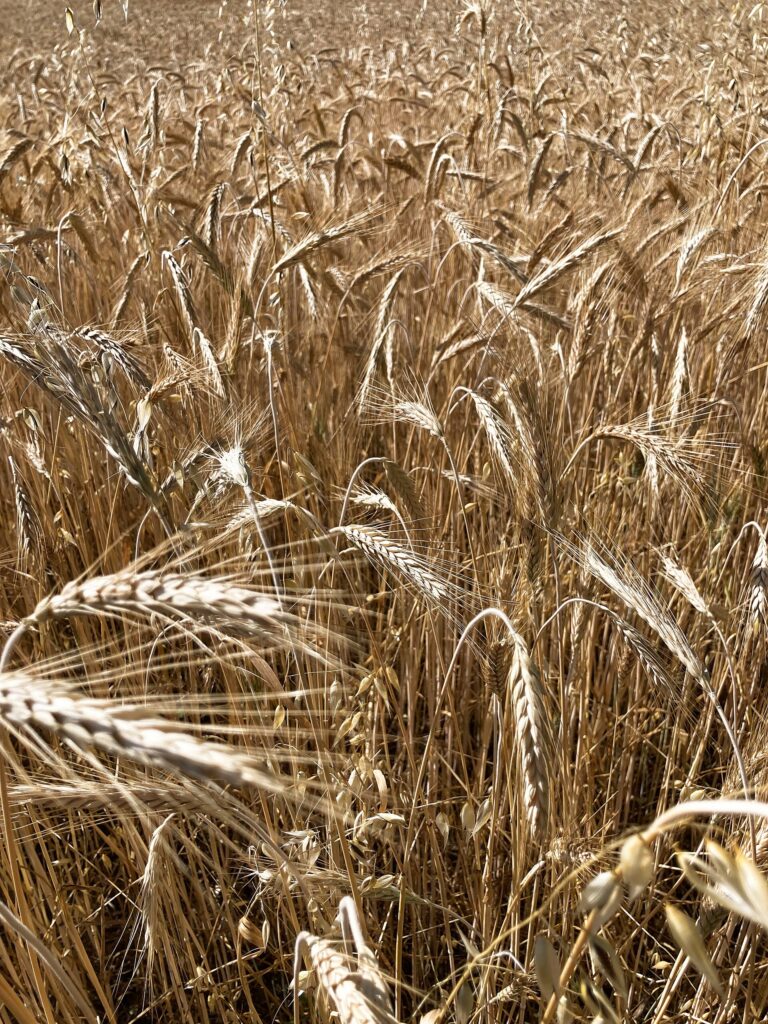
Ingredient or production reference: Wheat growing in a field, a grain-spirit raw material. This photograph illustrates the raw material or process, not a bottle of this specific style. Photo: Michele Castagnetti / Wikimedia Commons. CC BY-SA 4.0. Display resized; no other edits.

Keep exploring
- FSSAI consolidated alcoholic-beverage regulations, August 2025 — evidence reviewed 2026-09-18.
- 27 CFR 5.143 — evidence reviewed 2026-09-18.