
Canadian Whisky
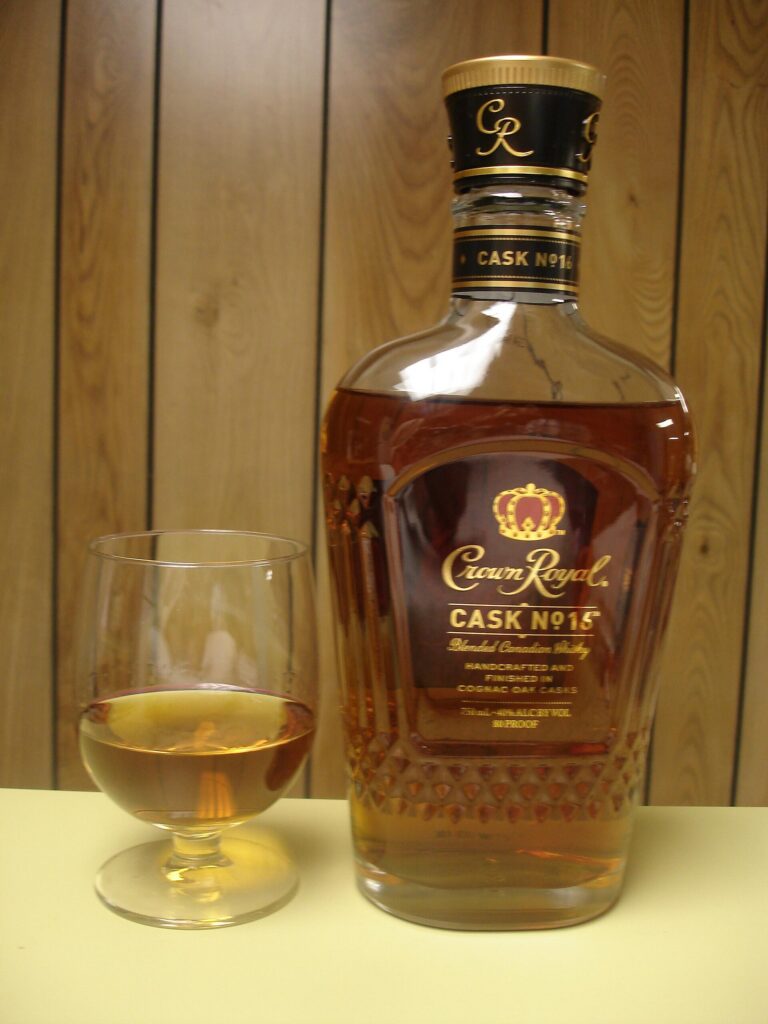
A diverse national whisky family ranging from gentle, vanilla-led blends to assertive rye-rich expressions. Fruit, grain, baking spice, floral notes and oak can all contribute. “Canadian” establishes origin and production rules, not an obligation to be light, mild or made chiefly from rye.
Color
Maturation
Alcohol
Sweetness
Balance
History
Canadian whisky’s industrial history is illustrated by Hiram Walker’s establishment of his business at Walkerville in 1858. Canadian Club’s chronology connects the brand with a developing distilling enterprise and an expanding cross-border market. That is an influential producer history, not the invention of every Canadian whisky. The national category grew through multiple businesses and should not be reduced to a claim that all Canadian whisky began as one rye recipe. Canadian Club: Hiram Walker and company history.
Classic characteristics
Appearance
Light gold to deep amber; wood and permitted treatment both may influence shade.
Aroma
Light to pronounced cereal, vanilla, orchard fruit, floral notes and rye-associated spice, depending on composition.
Flavor
Soft and restrained through spicy and full; assess the declared expression rather than a national stereotype.
Sweetness
Dry to sweet-seeming, with actual formulation varying; sweet aroma alone does not establish added sugar.
Mouthfeel
Light, silky, creamy or robust; grain and blending choices create a wide range.
Finish
Short to long, with grain, oak, fruit or spice continuing in proportion to intensity.
Flavor Profile Deep Dive
Judge within Canadian identity and the documented recipe; a rye label does not impose the U.S. rye mash percentage. Investigate persistent solvent-like pungency, unpleasant stale character or wood astringency that overwhelms the intended expression. A descriptor alone cannot prove a distillation-cut error, additive use or chemical safety.
Service notes
Choose a documented restrained blend and a documented rye-led expression for comparison. Explain each bottle's grain composition only when the producer discloses it. Discuss the difference between a protected national identity and a sensory category. When recommending to a guest, use flavour intensity, spice and intended serve as the deciding language rather than promising that every Canadian whisky tastes smooth or sweet.
Style parameters
| Parameter | Boundary or expectation |
|---|---|
| Base material | Fermented grain mash; identify grain and component types |
| Bottled strength | Canadian minimum 40% ABV; higher-strength releases remain within the broad family. |
| Canada: bottled ABV | at least 40%; see identity requirements. |
| United States: bottled ABV | at least 40%; Whiskey identity; protected origin and named types have additional rules. |
| Color and clarity | Light gold to deep amber; wood and permitted treatment both may influence shade. |
| Maturation | At least three years in small wood; age wording requires the applicable Canadian rules. |
| Additions | Flavouring is permitted under the Canadian identity; do not import bourbon's additive rules. |
Legal limits apply only to the named jurisdiction and identity. ADI entry conditions and typical sensory expectations are separate; a product example is not a universal range.
Cocktail connections
Style comparison
A Canadian rye name does not prove a majority-rye mash, although genuinely rye-dominant and all-rye products exist. Producers may distil and mature components separately before blending, giving considerable flexibility. Canada is also not synonymous with one distillation method. U.S. regulations recognize Canadian whisky as a distinctive Canadian product rather than relabelling it under domestic rye criteria.
Ingredients
Fermented grain mash; identify grain and component types
Production notes
The current identity is in Canadian Food Compositional Standards, Volume 2, §2.1.3, following the 2024 relocation of the former food regulation. Whisky must be mashed, distilled and aged in Canada, with at least three years in small wood and at least 40% ABV. Permitted flavouring is part of the Canadian framework. The names Canadian whisky, Canadian rye whisky and rye whisky share this standard; the U.S. rye mash threshold should not be imposed on them.
Commercial examples
| Expression | Stated ABV | Source/market review | Eligibility note |
|---|---|---|---|
| Crown Royal Fine De Luxe | 40% | U.S. producer page; checked 2026-09-18 | Producer identity and stated strength checked; not a tasting or full label-compliance certification |
Retained example and source context. CFIA current compositional standards, §2.1.3; remaining age provisions; the U.S. whiskey standard for U.S. recognition. ADI scope: S107.
Photo credit
Crown Royal Cask No. 16 Canadian whisky. Photo: Flickr user: @joefoodie / Wikimedia Commons. CC BY 2.0. Display resized; no other edits.

Keep exploring
- CFIA Canadian Food Compositional Standards, Volume 2, 2.1.3 — evidence reviewed 2026-09-18.
- 27 CFR 5.143 — evidence reviewed 2026-09-18.