
Commercial Examples
Affligem Tripel, Chimay Cinq Cents, La Rulles Tripel, La Trappe Tripel, St. Bernardus Tripel, Unibroue La Fin Du Monde, Val-Dieu Triple, Watou Tripel, Westmalle Tripel

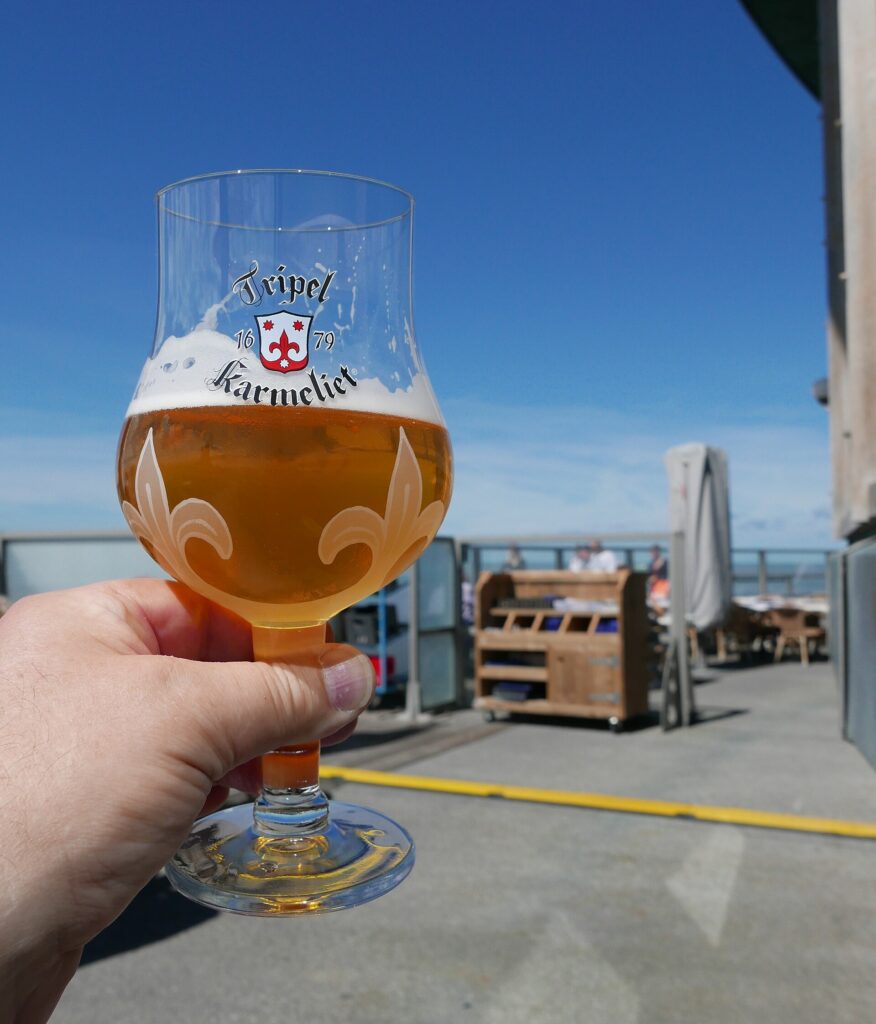
A pale, somewhat spicy, dry, strong Trappist ale with a pleasant rounded malt flavor and firm bitterness. Quite aromatic, with spicy, fruity, and light alcohol notes combining with the supportive clean malt character to produce a surprisingly drinkable beverage considering the high alcohol level.
If you believe the most fad-driven beer hype out there, you'd think that a "beer nerd" is someone who won't drink an IPA made without lactose and fruit added or a stout without a chocolate cake tossed into the boil. There is another kind of beer nerd, however. These are the folks who toil in searches for the outdated, foreign, and underappreciated styles of the time. You can mark the team at Black Flannel down in both of those categories…we love wacky experiments and more obscure foreign styles, and the Tripel might be chief among them.
Though this style has strong roots in monastery beers brewed for more than a thousand years, the style as we know it was born only around 100 years ago. According to legendary beer writer Michael Jackson, it's likely that a secular brewer, Hendrik Verlinden, who we met in our post on Dubbel, developed the first of these when he brewed Witkap Pater for the Slaghmuylder Brewery, which is now called Witkap Tripel. Westmalle brewed a similar style in 1934 when their new brewery was up and running, which was a higher gravity version that took off among Trappist brewers. Westmalle claims only to have changed that original recipe once in the 1950s, when the monks there added more hops, after which it has remained the same.
One of the most endearing qualities of this style is its deep connection to the historical brewing practices in and around modern-day Belgium. For centuries, if not longer, breweries outside of monastic life in the region were largely small farm operations, brewing beer for their own consumption. As any agricultural community might, they used resources to their fullest potential at every opportunity, including in their beer recipes. The use of candy sugar (sometimes spelled candi sugar) is a trend that comes from early farmhouse brewing practice, since, according to another resource by Jackson, farmers regularly extracted their own beet sugar by creating a syrup and allowing it to crystalize. When added to the boil, the sugar is sterilized and carried into the fermenting wort, where the yeast can metabolize it much more quickly than the more complex maltose that makes up most fermentable extract from malt. The result is a beer with higher ABV that doesn't feel-and usually doesn't taste-like it, since the sugar doesn't contribute body-building protein or long-chain starch. This practice, adopted by monasteries as well, is sometimes looked down on as unnecessary by some, and as a downright brewing crutch by others. We tend to agree with Belgian brewers, but also think it's a silly argument to begin with…if the sugar (or spice) makes the beer better, why not use it?
Belgian Tripels are one of the holy grails in most brewer's recipe efforts, and why wouldn't they be. The complexity of this style demands an extremely careful and balanced orchestration of yeast, malt, hops, and alcohol. When done well, it can be a revelation in a glass…when done poorly, it can be a relegation to the drain. The classic Trappist versions have some variety among them, but they're a great bet if you're interested in trying out this difficult-to-characterise style. For a domestic version, some of our favorites are brewed by Cambridge Brewing's "Tripel Threat" and Allagash's "Curieux." When you open one, pour it at cellar temp and ask a friend over…these beers drink way below their weight class.
Originally popularized by the Trappist monastery at Westmalle.
Gold
Long and complex
Fruit, spice, alcohol, and noble hops
Complex
Malt balanced by hops and yeast-derived phenols
Medium-light body
High carbonation
Overall Impression: A pale, somewhat spicy, dry, strong Trappist ale with a pleasant rounded malt flavor and firm bitterness. Quite aromatic, with spicy, fruity, and light alcohol notes combining with the supportive clean malt character to produce a surprisingly drinkable beverage considering the high alcohol level.
Aroma: Complex bouquet with moderate to significant spiciness, moderate fruity esters and low alcohol and hop aromas. Generous spicy, peppery, sometimes clove-like phenols. Esters are often reminiscent of citrus fruits such as oranges, but may sometimes have a slight banana character. A low yet distinctive spicy, floral, sometimes perfumy hop character is usually found. Alcohols are soft, spicy and low in intensity. The malt character is light, with a soft, slightly grainy-sweet or slightly honey-like impression. The best examples have a seamless, harmonious interplay between the yeast character, hops, malt, and alcohol.
Appearance: Deep yellow to deep gold in color. Good clarity. Effervescent. Long-lasting, creamy, rocky, white head resulting in characteristic Belgian lace on the glass as it fades.
Flavor: Marriage of spicy, fruity and alcohol flavors supported by a soft, rounded grainy-sweet malt impression, occasionally with a very light honey note. Low to moderate phenols are peppery in character. Esters are reminiscent of citrus fruit such as orange or sometimes lemon, and are low to moderate. A low to moderate spicy hop character is usually found. Alcohols are soft, spicy, and low in intensity. Bitterness is typically medium to high from a combination of hop bitterness and yeast-produced phenolics. Substantial carbonation and bitterness lends a dry finish with a moderately bitter aftertaste with substantial spicy-fruity yeast character. The grainy-sweet malt flavor does not imply any residual sweetness.
Mouthfeel: Medium-light to medium body, although lighter than the substantial gravity would suggest. Highly carbonated. The alcohol content is deceptive, and has little to no obvious warming sensation. Always effervescent.
Comments: High in alcohol but does not taste strongly of alcohol. The best examples are sneaky, not obvious. High carbonation and attenuation helps to bring out the many flavors and to increase the perception of a dry finish. Most Trappist versions have at least 30 IBUs and are very dry. Traditionally bottle-conditioned (or refermented in the bottle).
History: Originally popularized by the Trappist monastery at Westmalle.
Characteristic Ingredients: Pilsner malt, typically with pale sugar adjuncts. Saazer-type hops or Styrian Goldings are commonly used. Belgian yeast strains are used – those that produce fruity esters, spicy phenolics and higher alcohols – often aided by slightly warmer fermentation temperatures. Spice additions are generally not traditional, and if used, should be a background character only. Fairly soft water.
Style Comparison: May resemble a Belgian Golden Strong Ale but slightly darker and somewhat fuller-bodied, with more emphasis on phenolics and less on esters. Usually has a more rounded malt flavor but should never be sweet.
Vital Statistics: OG: 1.075 – 1.085 IBUs: 20 – 40 FG: 1.008 – 1.014 SRM: 4.5 – 7 ABV: 7.5 – 9.5%
Commercial Examples: Affligem Tripel, Chimay Cinq Cents, La Rulles Tripel, La Trappe Tripel, St. Bernardus Tripel, Unibroue La Fin Du Monde, Val-Dieu Triple, Watou Tripel, Westmalle Tripel
Pilsner malt
Simple sugar
Noble hops
Trappist Ale Yeast
Traditional Tripel brewing methods vary based on the producer. Unlike the Dubbel/Dark Strong parti-gyle, Triples are typically produced with a single grist. Step mashes are common to increase fermentability, and simple sugar can be a significant portion of the grain bill. Typical fermentation temperature also varies depending on the producer. Westmalle ferments their Tripel in the mid 60s, while Westvleteren allows theirs to rise into the 80s freely. Bottle or keg conditioning is imperative for a traditional take on the style.
At the Pub: Rabbit Tourtiere
Brunch: Quail eggs benedict with herbed "beeronaise"
Cheese pairing: Funky washed-rind Camembert
Agave Dream
New: Bright Eyes
Old: Hildegard
Affligem Tripel, Chimay Cinq Cents, La Rulles Tripel, La Trappe Tripel, St. Bernardus Tripel, Unibroue La Fin Du Monde, Val-Dieu Triple, Watou Tripel, Westmalle Tripel