
Australian Sparkling Ale
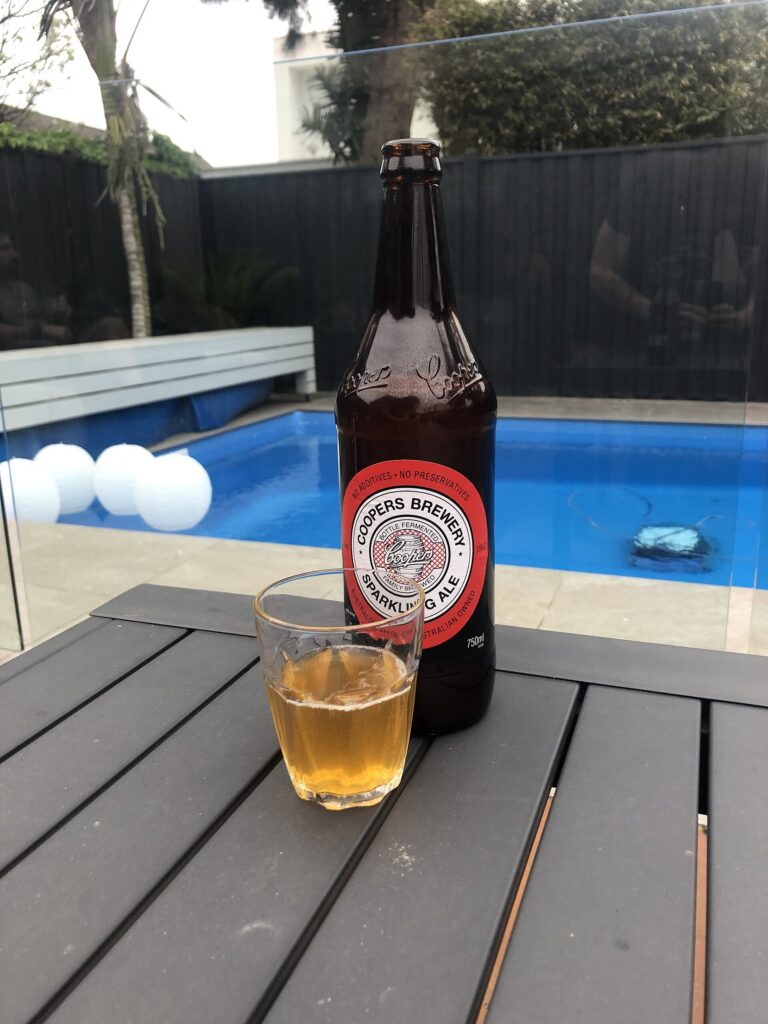

A golden, refreshing brew with elevated hopping and a clean finish. Excellent refresher in warm weather. Smooth and balanced, all components merge together with similar intensities. Moderate flavors showcasing Australian ingredients. Very drinkable, suited to a hot climate. Relies on yeast character.
Color
Bitterness
Alcohol
Sweetness
Balance
History
Historical Development
Imperialism's greatest contribution to beer history isn't the beer itself, but rather the consequent spread of shipping information and advertisements that track the styles and processes in those places and times. By 1789, Britain had established a massive colony in Eastern Australia. As Martyn Cornell outlines, the next century saw British brewers—particularly those in Burton—recognize the possibility of selling to this new market. Advertisements and records show that the first references to "Australian Ale" as a category was in 1841. In the following decades, ales sent to Australia ranged from 7% ABV to above 10%.
At the same time, Australians tried their hand at brewing something like the British styles, which had gained popularity among natives as well as colonists. Faced with the monumental task of matching the style and quality of the most technologically advanced brewing industry on the planet, Australia's newly established breweries floundered. However, the rise of lager later in that century turned heads in the notoriously hot and dry new territory, and brewers responded with a lager-like ale not unlike the Cream Ale in the states.
Geographic Origin
Only one commercial example survives from the colonial period: Coopers began brewing their Sparkling Ale in 1862 and continues producing it to this day. This style originated in Adelaide, South Australia.
Modern Evolution
The style is more balanced and with a lower ABV than the original British conception, both outgrowths of the competition with pale lager. A major distinction is that Australian Sparkling Ale is traditionally served like a Hefeweizen from the bottle: beer is poured until a couple of ounces remain, the bottle is swirled to gather the remaining yeast, and that is then poured into the glass, giving an otherwise dry and highly carbonated beer unexpected fullness on the palate.
Classic characteristics
Appearance
Deep yellow to light amber in color, often medium gold. Tall, frothy, persistent white head with tiny bubbles. Noticeable effervescence due to high carbonation. Brilliant clarity if decanted, but typically poured with yeast to have a cloudy appearance.
Aroma
Fairly soft, clean aroma with a balanced mix of esters, hops, malt, and yeast—all moderate to low in intensity. The esters are frequently pears and apples, possibly with a very light touch of banana. The hops are earthy, herbaceous, or might show the characteristic iron-like Pride of Ringwood nose. The malt can range from neutral grainy to moderately sweet to lightly bready; no caramel should be evident.
Flavor
Medium to low rounded, grainy to bready malt flavor, initially mild to malty-sweet but a medium to medium-high bitterness rises mid-palate to balance the malt. Medium to medium-high hop flavor, somewhat earthy and possibly herbal, resinous, peppery, or iron-like. Medium-high to medium-low esters, often pears and apples. Highly attenuated, giving a dry finish with lingering bitterness. Should not be bland.
Mouthfeel
- ABV: 4.5-6.0%
- Body: Medium to medium-full
- Carbonation: High to very high, crisp and spritzy
- Finish: Dry, lingering bitterness
- Texture: Smooth but gassy
Flavor Profile Deep Dive
Primary Flavors
Grainy sweet with light esters of pears and apples. Earthy, herbal, or peppery English hops. Balanced grain-to-hop ratio. Highly attenuated with a dry finish.
Secondary Flavors
Very light fruit character from yeast. Possible mineral or sulfury notes, especially if yeast is present. Iron-like character from Pride of Ringwood hops. Low residual sweetness.
Aftertaste
Lingering bitterness from medium to medium-high hop profile. Dry finish with subtle fruit and grain notes. Very clean.
Service notes
Serve fresh in a pint glass at 38°F. For the traditional experience, pour until 2 ounces remain in the bottle, swirl to gather yeast, and pour that into the glass for a cloudy, full-bodied version.
BJCP designation
Overall Impression: Smooth and balanced, all components merge together with similar intensities. Moderate flavors showcasing Australian ingredients. Large flavor dimension. Very drinkable, suited to a hot climate. Relies on yeast character.
Aroma: Fairly soft, clean aroma with a balanced mix of esters, hops, malt, and yeast – all moderate to low in intensity. The esters are frequently pears and apples, possibly with a very light touch of banana (optional). The hops are earthy, herbaceous, or might show the characteristic iron-like Pride of Ringwood nose. The malt can range from neutral grainy to moderately sweet to lightly bready; no caramel should be evident. Very fresh examples can have a lightly yeasty, sulfury nose.
Appearance: Deep yellow to light amber in color, often medium gold. Tall, frothy, persistent white head with tiny bubbles. Noticeable effervescence due to high carbonation. Brilliant clarity if decanted, but typically poured with yeast to have a cloudy appearance. Not typically cloudy unless yeast roused during the pour.
Flavor: Medium to low rounded, grainy to bready malt flavor, initially mild to malty-sweet but a medium to medium-high bitterness rises mid-palate to balance the malt. Caramel flavors typically absent. Highly attenuated, giving a dry finish with lingering bitterness, although the body gives an impression of fullness. Medium to medium-high hop flavor, somewhat earthy and possibly herbal, resinous, peppery, or iron-like but not floral, lasting into aftertaste. Medium-high to medium-low esters, often pears and apples. Banana is optional, but should never dominate. May be lightly minerally or sulfury, especially if yeast is present. Should not be bland.
Mouthfeel: High to very high carbonation, giving mouth filling bubbles and a crisp, spritzy carbonic bite. Medium to medium-full body, tending to the higher side if poured with yeast. Smooth but gassy. Stronger versions may have a light alcohol warmth, but lower alcohol versions will not. Very well-attenuated; should not have any residual sweetness.
Comments: Coopers has been making their flagship Sparkling Ale since 1862, although the formulation has changed over the years. Presently the beer will have brilliant clarity if decanted, but publicans often pour most of the beer into a glass then swirl the bottle and dump in all the yeast. In some bars, the bottle is rolled along the bar! When served on draught, the brewery instructs publicans to invert the keg to rouse the yeast. A cloudy appearance for the style seems to be a modern consumer preference. Always naturally carbonated, even in the keg. A present-use ale, best enjoyed fresh.
History: Brewing records show that the majority of Australian beer brewed in the 19th century was draught XXX (Mild) and porter. Ale in bottle was originally developed to compete with imported bottled pale ales from British breweries, such as Bass and Wm Younger' Monk. By the early 20th century, bottled pale ale went out of fashion and "lighter" lager beers were in vogue. Many Australian Sparkling and Pale Ales were labeled as ales, but were actually bottom-fermented lagers with very similar grists to the ales that they replaced. Coopers of Adelaide, South Australia is the only surviving brewer producing the Sparkling Ale style.
Characteristic Ingredients: Lightly kilned Australian 2-row pale malt, lager varieties may be used. Small amounts of crystal malt for color adjustment only. Modern examples use no adjuncts, cane sugar for priming only. Historical examples using 45% 2 row, 30% higher protein malt (6 row) would use around 25% sugar to dilute the nitrogen content. Traditionally used Australian hops, Cluster, and Goldings until replaced from mid-1960s by Pride of Ringwood. Highly attenuative Burton-type yeast (Australian-type strain typical). Variable water profile, typically with low carbonate and moderate sulfate.
Style Comparison: Superficially similar to English Pale Ales, although much more highly carbonated, with less caramel, less late hops, and showcasing the signature yeast strain and hop variety. More bitter than IBUs might suggest due to high attenuation, low final gravity, and somewhat coarse hops.
Vital Statistics: OG: 1.038 – 1.050 IBUs: 20 – 35 FG: 1.004 – 1.006 SRM: 4 – 7 ABV: 4.5 – 6.0%
Commercial Examples: Coopers Original Pale Ale, Coopers Sparkling Ale
Brewers Association designation
Australian-Style Pale Ale
Color: Straw to medium amber
Clarity: Yeast, chill and/or hop haze may be present in this style at low levels but are not essential
Perceived Malt Aroma & Flavor: Very low to medium
Perceived Hop Aroma & Flavor: Medium-low to medium-high, exhibiting attributes typical of modern Australian hop varieties such as tropical fruit, mango, passionfruit, and/or stone-fruit
Perceived Bitterness: Low to medium-high
Fermentation Characteristics: Very low to low fruity esters are acceptable but not essential.
Body: Low to medium-low with a dry finish
Additional notes: Overall impression is a well-integrated easy drinking, refreshing pale ale style with distinctive fruity Australian hop aromas and flavours. Diacetyl is usually absent in these beers but may be present at very low levels. DMS should not be present.
Original Gravity (Plato) 1.040-1.052 (10-13 Plato) – Apparent Extract/Final Gravity (Plato) 1.006-1.010 (1.5-2.5 Plato) – Alcohol by Weight (Volume) 3.2%-4.7% (4%-6%) – Bitterness (IBU) 15-40 – Color SRM (EBC) 3-9 (6-18 EBC)
Style comparison
Parent Categories
- English Pale Ale (12A)
- Cream Ale (1D)
Variant Styles
- Australian Pale Ale (Modern variants with Australian hops)
Similar Styles
- English Bitter (11A)
- Session IPA (21A)
Ingredients
Grain Bill
Lightly kilned Australian 2-row pale malt, lager varieties may be used. Small amounts of crystal malt for color adjustment only. Modern examples use no adjuncts, cane sugar for priming only.
Yeast
Highly attenuative Burton-type yeast (Australian-type strain typical). Ferment at 68°F, and raise to 72°F toward the end of active fermentation to achieve full attenuation.
Water Profile
Variable water profile, typically with low carbonate and moderate sulfate.
Brewing process
Mash Profile
A single infusion mash is traditional, and should be designed for maximum fermentability. Aim for color in the territory between gold and amber (5-6 SRM).
Fermentation
Ferment for maximum attenuation. Naturally carbonated, even in the keg. A present-use ale, best enjoyed fresh.
Food pairings
At the Pub: Smash burger and fries
Takeout: Fish and chips
Casual date: Ramen
Cheese
Aged white cheddar, sharp provolone
Meat & Seafood
Smash burger and fries, fish and chips, ramen, grilled fish
Desserts
Light fruit desserts, lemon bars
Spirit pairings
Black Flannel Vermont Common
The soundtrack
New: The Beach Boys
Old: Percy Grainger, Lincolnshire Posy
Keep exploring
- BJCP Guidelines: 12B (Australian Sparkling Ale)
- Beer Judge Certification Program: BJCP Official Guidelines
- Brewer's Association: BA Beer Style Guidelines
- Australian Brewing Heritage: Colonial brewing traditions and Coopers legacy