
Joven Tequila
A broad blending or mellowing class, capable of combining the directness of blanco with aged or adjusted character. “Joven” does not prescribe a single intensity, colour depth or flavour profile.
Color
Maturation
Alcohol
Sweetness
Balance
History
Joven and oro, or gold, appear together in Mexico’s tequila standard rather than as independent historical traditions. Their history belongs to tequila classification and the commercial presentation of lighter-colored or blended expressions. ADI lists joven separately, but the available regulatory evidence does not justify an origin story different from gold tequila’s. Mexico: NOM-006-SCFI-2005, published 2006.
Classic characteristics
Appearance
Clear to gold or amber, depending on composition and treatment.
Aroma
Light through pronounced; agave with optional wood or mellowing-associated notes.
Flavor
Broad; direct agave can coexist with richer, rounder impressions.
Sweetness
Dry through sweet-seeming; neither the name nor colour gives a sugar value.
Mouthfeel
Light through rounded; describe warmth and weight from the sample.
Finish
Short through long, simple through layered; no single target duration.
Flavor Profile Deep Dive
Assess blending or mellowing as documented; “joven” does not mandate one color or aroma intensity. Investigate persistent unpleasant solvent-like, stale or sulfurous character in context. Do not diagnose a specific production error from one aroma; appropriate fermentation character and proof-related warmth are not automatic faults.
Service notes
Present the category as a lesson in the limits of names. Ask what the label establishes and what further production information is required. A blend can be purposeful and expressive, but the tasting should explain why rather than reward the blending story alone. For a guest, describe the actual bottle and, when known, its blending approach. Avoid suggesting a specific serving method until its sweetness, weight and aromatic intensity have been considered.
Style parameters
Legal limits apply only to the named jurisdiction and identity. ADI entry conditions and typical sensory expectations are separate; a product example is not a universal range.
Cocktail connections
Browse published cocktails. Documented recipes, conditional style choices and development substitutions are labeled separately.
No established classic or recognized modern cocktail match was found for this specific style in the sources reviewed. This records a research gap, not proof that no cocktail exists. No neighboring style has been substituted to fill the space.
Style comparison
It is incorrect to teach joven as simply unaged tequila, or to claim every joven is a blend containing a particular percentage of older spirit. Its legal overlap with Gold should also be stated explicitly. Reposado, añejo and extra añejo provide different maturation declarations; this class must not inherit those declarations merely because aged spirit is present in a blend.
Ingredients
Agave tequilana Weber var. azul; verify declared fermentation category
Production notes
joven/oro (the shared blending or permitted mellowing class) applies. The word shares its legal class with Gold/Oro, although commercial products and consumer expectations may differ. The supplied ADI table gives each a separate row; this guide follows that organization without inventing a legal distinction. Confirm how a particular joven is assembled before explaining it as an aged blend.
Commercial examples
No newly verified benchmark is designated in this revision. Select a documented qualifying expression before running a benchmark tasting.
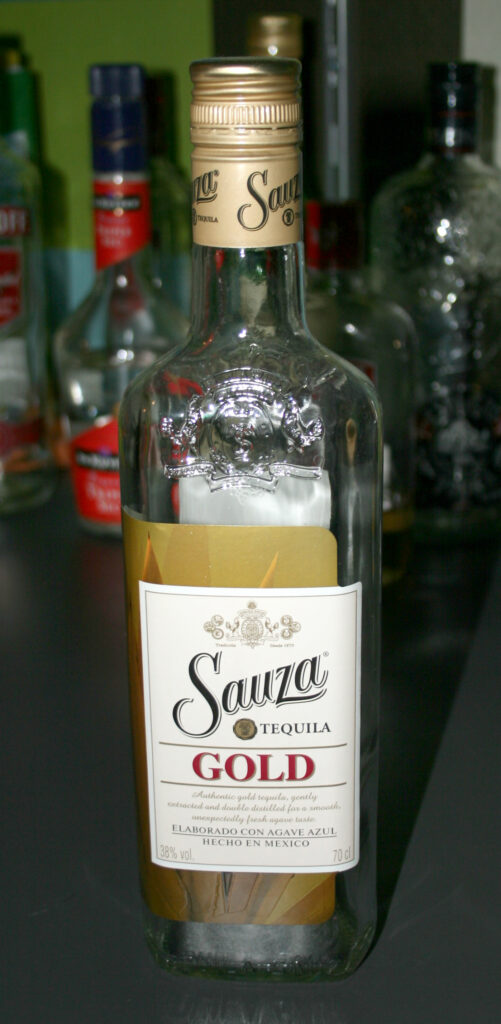
Retained example and source context. Shared tequila references establish the class. S011 gives a documented commercial expression within the synonymous legal family. Its flavour should not be imposed on every joven.
Photo credit
Sauza Gold joven tequila. Photo: StoliNL / Wikimedia Commons. CC BY-SA 3.0. Display resized; no other edits.

Keep exploring
- NOM-006-SCFI-2012 — evidence reviewed 2026-09-18.
- 27 CFR 5.148 — evidence reviewed 2026-09-17.