
Gold Tequila
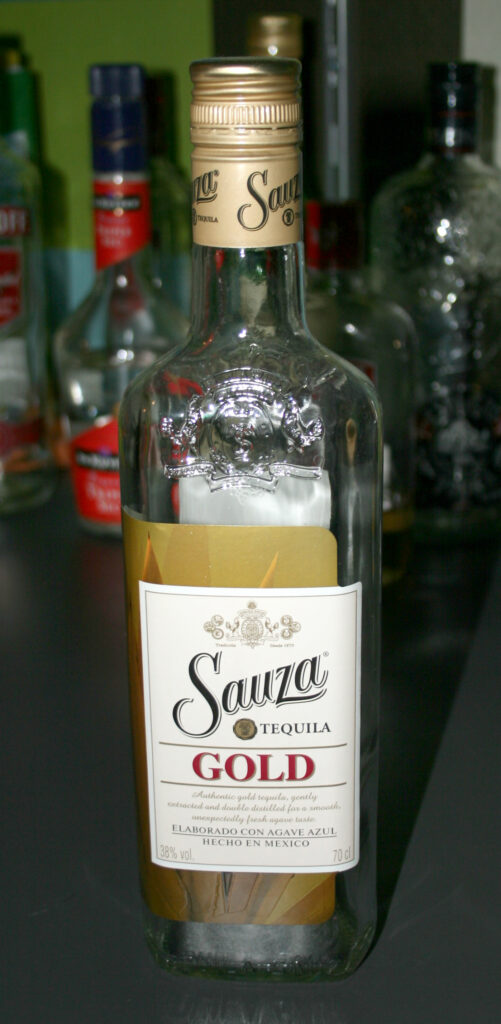
A tequila commonly presented with a golden colour and an approachable, rounded flavour. In teaching, its most important point is that the word Gold does not function as a guaranteed age statement.
Color
Maturation
Alcohol
Sweetness
Balance
History
Gold tequila shares its documented classification history with joven: Mexico’s standard pairs the terms joven and oro. Its appearance is therefore not evidence of a separate, long-aged ancestral style. The separate Gold heading in this guide preserves ADI’s list while acknowledging that the legal and historical lineage overlaps with Joven. Mexico: NOM-006-SCFI-2005, published 2006.
Classic characteristics
Appearance
Commonly pale to medium gold; clarity is usually bright.
Aroma
Often light to medium; agave with a rounded, sweet-smelling impression.
Flavor
Light to medium in the cited example; agave, restrained oak and vanilla associations.
Sweetness
Frequently sweet-seeming; quantify only from reliable product data.
Mouthfeel
Often light and rounded; warming rather than necessarily heavy.
Finish
Short to medium in approachable examples; longer expressions are possible.
Flavor Profile Deep Dive
Evaluate the gold presentation without diagnosing caramel or barrel age by sight. Investigate persistent unpleasant solvent-like, stale or sulfurous character in context. Do not diagnose a specific production error from one aroma; appropriate fermentation character and proof-related warmth are not automatic faults.
Service notes
Compare a Gold tequila with a reposado and ask which features can be observed directly and which require label evidence. This avoids the common mistake of describing both as aged solely because they are coloured. In a Margarita comparison, keep the recipe constant first and note whether the spirit's rounded impression changes the perceived balance. If adjusting sweetness, do so because of the finished drink's taste, not an unverified assumption about the bottle's sugar content.
Style parameters
Legal limits apply only to the named jurisdiction and identity. ADI entry conditions and typical sensory expectations are separate; a product example is not a universal range.
Cocktail connections
Browse published cocktails. Documented recipes, conditional style choices and development substitutions are labeled separately.
No established classic or recognized modern cocktail match was found for this specific style in the sources reviewed. This records a research gap, not proof that no cocktail exists. No neighboring style has been substituted to fill the space.
Style comparison
Reposado and Gold are not interchangeable age terms. Joven and Gold, however, share the same legal class even though ADI lists them separately. A staff member should be able to explain both points without implying that every Gold tequila is identical, or that the class is automatically unsuitable for neat enjoyment. Preference and product quality require an actual evaluation.
Ingredients
Agave tequilana Weber var. azul; verify declared fermentation category
Production notes
This is joven/oro (the shared blending or permitted mellowing class) under an alternative name. ADI supplies a distinct row, which is retained here. Colour or a vanilla association cannot establish whether an individual bottle's character comes from aged components, permitted mellowing ingredients, or their combination. Obtain product documentation for that explanation.
Commercial examples
No newly verified benchmark is designated in this revision. The original example discussion below remains a research lead, with its original qualifications.
Retained example and source context. Cuervo Especial Gold documents a light-gold presentation, subtle agave, oak and vanilla associations, and a short finish. Legal parameters: shared tequila rules.
Photo credit
Sauza Gold tequila. Photo: StoliNL / Wikimedia Commons. CC BY-SA 3.0. Display resized; no other edits.

Keep exploring
- NOM-006-SCFI-2012 — evidence reviewed 2026-09-18.
- 27 CFR 5.148 — evidence reviewed 2026-09-17.