Black Flannel Academy

Lambic

pale-color · Sour · standard-strength · Traditional style · western-europe · wheat-beer-family · wild-fermented
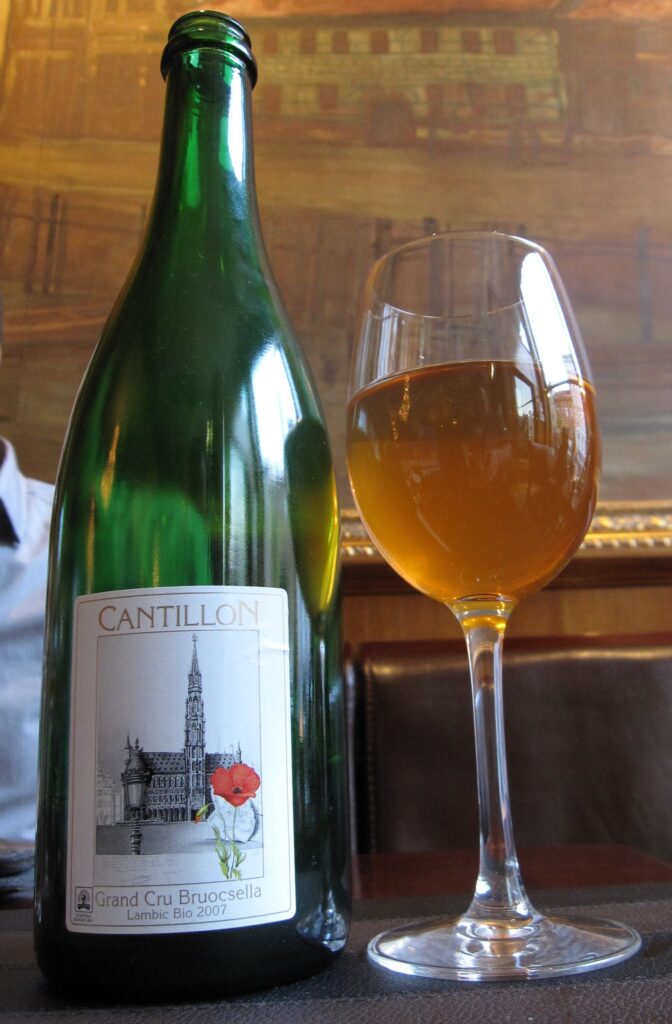
Cantillon Grand Cru Bruocsella 2007
Pictured: Cantillon Grand Cru Bruocsella 2007. Photo: Bernt Rostad from Oslo, Norway / Wikimedia Commons · CC BY 2.0. Resized and cropped for display.

Lambic represents beer at its most enigmatic and ancient. These spontaneously fermented beers from the Lambic region of Belgium use wild yeasts and bacteria naturally present in the environment. The result is profoundly dry, funky, complex, and intensely fascinating—or off-putting, depending on perspective. Lambic stands as direct connection to the earliest beer-making traditions, preserved through centuries in a specific geographic region.

Color

3 – 7 SRM

Bitterness

0 – 10 IBU

Alcohol

5.0 – 6.5% ABV

Sweetness

Profoundly dry with no residual sweetness.

Balance

History

Michael Jackson's Assessment

Renowned beer critic Michael Jackson famously wrote: "There is no more enigmatic drink." This simple statement captures the essence of lambic—it defies easy categorization and challenges modern brewers' assumptions about fermentation control.

Ancient Brewing Tradition

Lambic represents beer-making frozen in time. The fundamental techniques—turbid mashing, open fermentation, wooden vessel storage—connect directly to earliest brewing traditions. Archaeological evidence suggests beer-making similar to lambic dates to ancient civilizations.

Geographic Specificity

True lambic production is confined to the Lambic region of Belgium, an area with specific atmospheric conditions and microbial populations. The wild yeasts and bacteria that ferment lambic are endemic to this region and cannot be reliably replicated elsewhere, making lambic fundamentally terroir-dependent.

Modern Production Decline

Lambic production represents a tiny fraction of Belgian brewing today. Modern industrial efficiency drove consolidation. Only a handful of genuine producers remain, and many brew other styles alongside traditional lambic.

Classic characteristics

Appearance

Pale golden to pale amber color with exceptional clarity. Minimal head formation—lambics are traditionally still (uncarbonated). The clarity belies the intense complexity within.

Aroma

Intensely funky with complex wild yeast and bacteria character. Sour, acidic notes. Musty, earthy, vineyard-like character. Subtle fruit notes (apple, citrus). The aroma can be challenging to modern palates.

Flavor

Profoundly dry with no residual sweetness. Sour, acidic, puckering. Intensely funky with wild yeast/bacteria character. Subtle fruit character. Complex, multi-layered, evolving. Tannins from aged wood contribute astringency.

Mouthfeel

  • ABV: 5.0-6.5%
  • Body: Light
  • Carbonation: None (traditionally still)
  • Finish: Extremely dry, sour, complex

Flavor Profile Deep Dive

Primary Flavors

Extreme dryness and sourness from lactic acid fermentation dominate initially. Young lambics can be one-dimensionally sour—challenging even for experienced lambic enthusiasts.

Secondary Flavors (Age-Dependent)

With age, Brettanomyces develops complex character: funky, earthy, vineyard-like notes. Acetic acid contributes subtle vinegary character. Subtle fruit character emerges. Tannins from aged wood provide astringency.

Aftertaste

Extremely long, persistently dry and sour. No sweetness whatsoever. Complex layers continue unfolding for minutes.

Service notes

Serve at cool cellar temperature (50-55°F) in a wine glass to showcase the complexity. Traditional service is from wooden cask, still (uncarbonated).

BJCP designation

Overall Impression: A fairly sour, often moderately funky wild Belgian wheat beer with sourness taking the place of hop bitterness in the balance. Traditionally spontaneously fermented in the Brussels area and served uncarbonated, the refreshing acidity makes for a very pleasant cafe drink.

Aroma: A decidedly sour aroma is often dominant in young examples, but may become more subdued with age as it blends with aromas described as barnyard, earthy, goaty, hay, horsey, and horse blanket. A mild citrus-fruity aroma is considered favorable. An enteric, smoky, cigar-like, or cheesy aroma is unfavorable. Older versions are commonly fruity with aromas of apples or even honey. No hop aroma.

Appearance: Pale yellow to deep golden in color; age tends to darken the beer. Clarity is hazy to good. Younger versions are often cloudy, while older ones are generally clear. White colored head generally has poor retention.

Flavor: Young examples are often noticeably lactic-sour, but aging can bring this character more in balance with the malt, wheat and barnyard characteristics. Fruity flavors are simpler in young lambics and more complex in the older examples, where they are reminiscent of apples or other light fruits, rhubarb, or honey. Some citrus flavor (often grapefruit) is occasionally noticeable, and is desirable. The malt and wheat character are typically low with some bready-grainy notes. An enteric, smoky or cigar-like character is undesirable. Hop bitterness is low to none, and generally undetectable; sourness provides the balance. Typically has a dry finish. No hop flavor.

Mouthfeel: Light to medium-light body. In spite of the low finishing gravity, the many mouth-filling flavors prevent the beer from feeling like water. As a rule of thumb, lambic dries with age, which makes dryness a reasonable indicator of age. Has a medium to high tart, puckering quality without being sharply astringent. Traditional versions are virtually to completely uncarbonated, but bottled examples can pick up moderate carbonation with age.

Comments: Straight lambics are single-batch, unblended beers. Since they are unblended, the straight lambic is often a true product of the "house character" of a brewery and will be more variable than a gueuze. They are generally served young (6 months) and on tap as cheap, easy-drinking beers without any filling carbonation. Younger versions tend to be one-dimensionally sour since a complex Brett character often takes upwards of a year to develop. An enteric character is often indicative of a lambic that is too young. A noticeable vinegary or cidery character is considered a fault by Belgian brewers. Since the wild yeast and bacteria will ferment ALL sugars, they are typically bottled only when they have completely fermented.

History: Spontaneously fermented wild ales from the area in and around Brussels (the Senne Valley) stem from a farmhouse brewing tradition several centuries old. The number of producers is constantly dwindling.

Characteristic Ingredients: Unmalted wheat (30-40%), Pilsner malt and aged hops (3 years) are used. The aged hops are used more for preservative effects than bitterness, and makes actual bitterness levels difficult to estimate. Traditionally these beers are spontaneously fermented with naturally occurring yeast and bacteria in predominately oaken barrels. The barrels used are neutral with little oak character, so don't expect a fresh or forward oak character – more neutral is typical. Home-brewed and craft-brewed versions are more typically made with pure cultures of yeast commonly including Saccharomyces, Brettanomyces, Pediococcus and Lactobacillus in an attempt to recreate the effects of the dominant microbiota of Brussels and the surrounding countryside of the Senne River valley. Cultures taken from bottles are sometimes used but there is no simple way of knowing what organisms are still viable.

Style Comparison: Generally has a more simple sourness and complexity than a gueuze. Traditionally served uncarbonated from pitchers, while gueuze is bottled and very highly carbonated.

Vital Statistics: OG: 1.040 – 1.054 IBUs: 0 – 10 FG: 1.001 – 1.010 SRM: 3 – 7 ABV: 5.0 – 6.5%

Commercial Examples: The only bottled version readily available is Cantillon Grand Cru Bruocsella of whatever single batch vintage the brewer deems worthy to bottle. De Cam sometimes bottles their very old (5 years) lambic. In and around Brussels there are specialty cafes that often have draught lambics from traditional brewers or blenders such as Boon, De Cam, Cantillon, Drie Fonteinen, Lindemans, Timmermans and Girardin.

Brewers Association designation

  • Belgian-Style Lambic
    • Color: Gold to medium amber
    • Clarity: Cloudiness is acceptable
    • Perceived Malt Aroma & Flavor: Sweet malt character should not be present
    • Perceived Hop Aroma & Flavor: Not present to very low, and can include cheesy or floral lavender character. Hop character is achieved by using stale and aged hops at low rates.
    • Perceived Bitterness: Very low
    • Fermentation Characteristics: Characteristic horsey, goaty, leathery and phenolic aromas and flavors derived from Brettanomyces yeast are often present at moderate levels. High to very high fruity esters are present. Traditionally, Lambics are unblended and spontaneously fermented. They express high to very high levels of fruity esters as well as bacteria and yeast-derived sourness. Some versions are fermented with the addition of cultured yeast and bacteria. Carbonation can range from very low to high. Vanillin and other wood-derived flavors should not be present.
    • Body: Very low with dry mouthfeel
    • Additional notes: Lambics originating in the Brussels area of Belgium are often simply called Lambic. Versions of this beer style made outside of the Brussels area cannot be called true Lambics. These versions are said to be "Belgian-Style Lambic" and may be made to resemble many of the beers of true origin. Historically, traditional Lambic is dry and completely attenuated, exhibiting no residual sweetness either from malt, sugar or other sweeteners. Sweet versions may be created through addition of sugars or other sweeteners. Traditionally, Lambics are brewed with unmalted wheat and malted barley.
  • Original Gravity (°Plato) 1.047-1.056(11.7-13.8 °Plato) – Apparent Extract/Final Gravity (°Plato) 1.000-1.010(0-2.6 °Plato) – Alcohol by Weight (Volume) 4.0%-6.5%(5.0%-8.2%) – Bitterness (IBU) 9-23 – Color SRM (EBC) 6-13(12-26 EBC)

Style comparison

Parent Categories

Variant Styles

  • Gueuze (blended, carbonated)
  • Fruit Lambic (with cherries, raspberries, etc.)
  • Lambic variations by individual producers

Ingredients

Grain Bill

Belgian pale malt base (65-75%), unmalted wheat (25-35%), small amounts of roasted malt (1-2%). These proportions create the foundation for complex fermentation.

Hops

Aged hops (3+ years old) provide preservative character without bittering. Hop bitterness is minimal—the goal is antimicrobial preservation, not flavor contribution.

Brewing process

Mash Technique: Turbid Mashing

Lambic employs the intensive turbid mash technique:

  1. Initial infusion at lower temperature (~90-100°F)
  2. Pull grain-free wort portions at intervals
  3. Heat these wort portions to denature enzymes
  4. Return to mash, raising temperature gradually
  5. Final infusion to saccharification temperature

Purpose: The turbid mash leaves longer-chain starches in the wort that normal yeasts cannot ferment. These complex sugars remain available for wild yeasts and bacteria, which can ferment them over extended periods. This creates the beer's extreme dryness and complex fermentation.

Fermentation Process

Open fermentation using wide, shallow cooling vessels (koelschips) for cooling hot wort. Wild yeasts and bacteria from the environment begin fermentation.

Fermentation typically involves:

  • Saccharomyces cerevisiae (ale yeast)
  • Brettanomyces species (wild yeast)
  • Lactobacillus species (lactic acid bacteria)
  • Pediococcus species (acetic acid bacteria)

Each organism contributes distinct character.

Aging Vessels

Fermentation and aging occurs in oak barrels, traditionally old, neutral oak that doesn't impart wood character. The barrels harbor resident microflora that continues fermentation and contributes complexity.

Aging Timeline

Young lambic (1 year old): One-dimensional sourness from lactic acid bacteria. Brett character minimal.

Mature lambic (3+ years old): Complex Brett character develops. Acetic acid from acetic bacteria contributes vinegary notes. Balance between competing microorganisms creates sophistication.

Serving and Storage

Traditionally served still (uncarbonated) directly from wooden casks in Belgian cafés. This allows drinkers to experience lambic's pure character without carbonation's sensory interference.

Food pairings

At the Pub: Welsh Rarebit Brunch: Belgian Waffles with fresh whipped cream and candied strawberries Cheese pairing: Funky, washed rind Camembert

Cheese

Aged, pungent cheeses—blue cheese, aged cheddar, aged gouda

Meat & Seafood

Charcuterie, cured meats, oysters, light fish, salads with acidic components

Desserts

Fruit tarts, lighter fare; often served as aperitif

Spirit pairings

Dutch Soul

The soundtrack

New: Phish, The Farmhouse Old: Scriabin, Piano Concerto in F-sharp Minor

Keep exploring

  • BJCP Guidelines: 23D (Lambic)
  • Beer Judge Certification Program: BJCP Official Guidelines
  • Brewer's Association: BA Beer Style Guidelines
  • Lambic Region Heritage: Understanding geographic terroir in beer
  • Spontaneous Fermentation: Wild yeasts and bacteria in brewing
  • Michael Jackson Writings: The renowned beer critic's analysis of lambic

Commercial Examples

Belgian Specialty Cafés: Many Belgian establishments serve lambic on draft from local producers:

  • Boon
  • De Cam
  • Cantillon
  • Drie Fonteinen
  • Lindemans
  • Timmermans
  • Girardin

Bottled Examples: Very limited distribution outside Belgium. Cantillon produces Grand Cru Bruocsella only when the base lambic achieves exceptional quality—this bottled lambic is extremely rare and highly sought.

Return to all beer styles

Scroll to Top