Black Flannel Academy

Gueuze

aged ยท high-strength ยท pale-color ยท Sour ยท Traditional style ยท western-europe ยท wheat-beer-family ยท wild-fermented
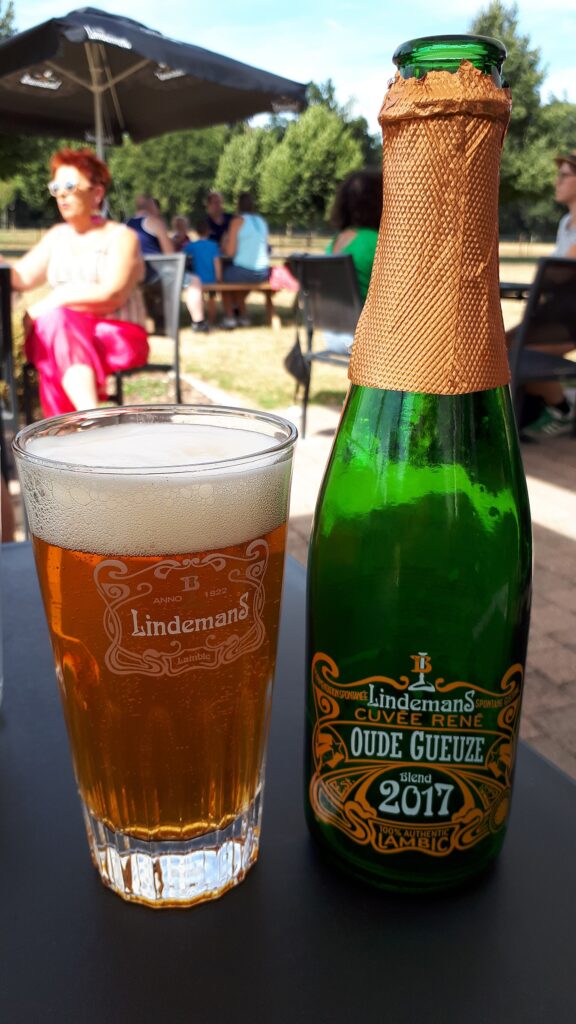
Lindemans Cuvรฉe Renรฉ Oude Gueuze
Pictured: Lindemans Cuvรฉe Renรฉ Oude Gueuze. Photo: Geertivp / Wikimedia Commons ยท CC BY-SA 4.0. Display crops and resized versions are available under the same license.

Gueuze is a blended spontaneously fermented beer from Belgium's Lambic region. It combines young (1-2 years old) and aged lambics (3+ years old) and is then bottle-conditioned for additional fermentation and carbonation. The result is a complex, carbonated beer with layers of sourness, funk, and subtle fruit character. Gueuze represents one of the world's most complex and age-worthy beer styles.

Color

3 – 7 SRM

Bitterness

0 – 10 IBU

Alcohol

5.0 – 8.0% ABV

Sweetness

Dry finish with absolutely no residual sweetness.

Balance

Extremely complex: sour and acidic balanced against subtle fruitiness and funk.

History

Etymology and Naming

The name "Gueuze" (pronounced "GOO-zuh") has debated origins. Some suggest it derives from "gas" or "geyser," referring to the beer's natural carbonation. Other theories propose it comes from Louis Paul Geus, a Brussels mayor, though this connection remains historically speculative.

Traditional Blending Practice

Gueuze is not typically produced by a single brewery, but rather by blenderiesโ€”establishments that purchase lambic wort, age it, blend it, and bottle it without filtering or pasteurization. This practice allows specialists to focus on blending expertise rather than complete brewing operations.

Appellation and Standards

Belgian Gueuze carries official appellation status (similar to Champagne, Bordeaux, or Kรถlsch). Strict standards govern its production: it must be a blend of lambics, must be bottle-conditioned without filtration or pasteurization, and must meet specific quality parameters.

"Oude" Designation

The term "Oude Gueuze" (old gueuze) designates higher-quality, more complex examples. Officially, Oude Gueuze must have an average age of at least one year, with a minimum of six months bottle conditioning. These stricter standards ensure greater complexity and maturity.

Historical Producers

Traditional Gueuze blenderies include Boon, De Cam, Cantillon, Drie Fonteinen, Lindemans, and Hanssels. These producers maintain centuries-old traditions while continuously innovating blending approaches.

Classic characteristics

Appearance

Pale golden to light amber color with excellent clarity (if not bottle-aged with sediment). Fine, dense white head with excellent retention. Bright, sparkling carbonation visible in the glass. Aged examples may show sediment settled at the bottom.

Aroma

Sour, acidic character with complex funky notes. Subtle fruit aromas (apricot, citrus). Aged, musty, wine-like character. Depth and complexity with no single dominant aroma.

Flavor

Extremely complex: sour and acidic balanced against subtle fruitiness and funk. Dry finish with absolutely no residual sweetness. Tannins from aged wood and wild fermentation. Layered flavors that evolve as the beer warms.

Mouthfeel

  • ABV: 5.0-8.0%
  • Body: Light to medium
  • Carbonation: High (from bottle conditioning)
  • Finish: Very dry, complex, refreshing

Flavor Profile Deep Dive

Primary Flavors

Sour, acidic character dominates from spontaneous fermentation and aging. Complexity of wild fermentation (Brett, Pediococcus, Acetobacter) creates layered flavors.

Secondary Flavors

Subtle fruit notes: apricot, citrus, dried fruit from long aging. Funky, earthy, wine-like characteristics. Tannins from aged wood and oak exposure. Increasingly complex with bottle age.

Aftertaste

Long, dry, complex finish. No sweetness whatsoever. Evolves significantly as the beer warms. Each sip may reveal new flavors.

Service notes

BJCP designation

Overall Impression: A complex, pleasantly sour but balanced wild Belgian wheat beer that is highly carbonated and very refreshing. The spontaneous fermentation character can provide a very interesting complexity, with a wide range of wild barnyard, horse blanket, or leather characteristics intermingling with citrusy-fruity flavors and acidity.

Aroma: A moderately sour aroma blends with aromas described as barnyard, leather, earthy, goaty, hay, horsey, and horse blanket. While some may be more dominantly sour, balance is the key and denotes a better gueuze. Commonly fruity with aromas of citrus fruits (often grapefruit), apples or other light fruits, rhubarb, or honey. A very mild oak aroma is considered favorable. An enteric, smoky, cigar-like, or cheesy aroma is unfavorable. No hop aroma.

Appearance: Golden color, with excellent clarity and a thick, rocky, mousse-like, white head that seems to last forever. Always effervescent.

Flavor: A moderately sour character is classically in balance with the malt, wheat and barnyard characteristics. A low, complementary sweetness may be present but higher levels are not traditional. While some may be more dominantly sour, balance is the key and denotes a better gueuze. A varied fruit flavor is common, and can have a honey-like character. A mild vanilla and/or oak flavor is occasionally noticeable. The malt is generally low and bready-grainy. An enteric, smoky or cigarlike character is undesirable. Hop bitterness is generally absent but a very low hop bitterness may occasionally be perceived; sourness provides most of the balance. Crisp, dry, and tart finish. No hop flavor.

Mouthfeel: Light to medium-light body. In spite of the low finishing gravity, the many mouth-filling flavors prevent the beer from feeling like water. Has a low to high tart, puckering quality without being sharply astringent. Some versions have a light warming character. Highly carbonated.

Comments: Gueuze is traditionally produced by mixing one, two, and three-year old lambic. "Young" lambic contains fermentable sugars while old lambic has the characteristic "wild" taste of the Senne River valley. A noticeable vinegary or cidery character is considered a fault by Belgian brewers. A good gueuze is not the most pungent, but possesses a full and tantalizing bouquet, a sharp aroma, and a soft, velvety flavor. Lambic is served uncarbonated, while gueuze is served effervescent. Products marked oude or ville are considered most traditional.

History: Spontaneously fermented wild ales from the area in and around Brussels (the Senne Valley) stem from a farmhouse brewing and blending tradition several centuries old. The number of producers is constantly dwindling and some producers are untraditionally sweetening their products (post fermentation) to make them more palatable to a wider audience. These guidelines describe the traditional dry product.

Characteristic Ingredients: Unmalted wheat (30-40%), Pilsner malt and aged hops (3 years) are used. The aged hops are used more for preservative effects than bitterness, and makes actual bitterness levels difficult to estimate. Traditionally these beers are spontaneously fermented with naturally occurring yeast and bacteria in predominately oaken barrels. The barrels used are old and have little oak character, so don't expect a fresh or forward oak character – more neutral is typical. Home-brewed and craft-brewed versions are more typically made with pure cultures of yeast commonly including Saccharomyces, Brettanomyces, Pediococcus and Lactobacillus in an attempt to recreate the effects of the dominant microbiota of Brussels and the surrounding countryside of the Senne River valley. Cultures taken from bottles are sometimes used but there is no simple way of knowing what organisms are still viable.

Style Comparison: More complex and carbonated than a lambic. The sourness isn't necessarily higher, but it tends to have more of a well-developed wild character.

Vital Statistics: OG: 1.040 – 1.060 IBUs: 0 – 10 FG: 1.000 – 1.006 SRM: 3 – 7 ABV: 5.0 – 8.0%

Commercial Examples: Boon Oude Gueuze, Boon Oude Gueuze Mariage Parfait, Cantillon Gueuze, De Cam Gueuze, De Cam/Drei Fonteinen Millennium Gueuze, Drie Fonteinen Oud Gueuze, Girardin Gueuze (Black Label), Hanssens Oude Gueuze, Lindemans Gueuze Cuvee Rene, Mort Subite (Unfiltered) Gueuze, Oud Beersel Oude Gueuze

Brewers Association designation

  • Traditional Belgian-Style Gueuze Lambic
    • Color: Gold to medium amber
    • Clarity: Cloudiness is acceptable, as Gueuze is traditionally bottle conditioned.
    • Perceived Malt Aroma & Flavor: Sweet malt character is not present
    • Perceived Hop Aroma & Flavor: Not present to very low and can include cheesy, floral or lavender-like attributes.
    • Perceived Bitterness: Very low
    • Fermentation Characteristics: These unflavored blended and secondary fermented Lambic beers may be very dry or mildly sweet and are characterized by intense fruity ester, sour, and acidic attributes. Diacetyl should not be present. Characteristic horsey, goaty, leathery and phenolic aromas and flavors derived from Brettanomyces yeast are often present at moderate levels. Old Lambic is blended with newly fermenting young Lambic to create this special style of Lambic. Vanillin and other wood-derived flavors should not be present. Carbonation can be none (flat) to medium.
    • Body: Very low with dry mouthfeel
    • Additional notes: Gueuze Lambics, whose origin is the Brussels area of Belgium, are often simply called Gueuze Lambic. Versions of this beer style made outside of the Brussels area are said to be "Belgian-Style Gueuze Lambics." The Belgian-style versions are made to resemble many of the beers of true origin. Historically, traditional Gueuze Lambics are dry and completely attenuated, exhibiting no residual sweetness either from malt, sugar or other sweeteners. Traditionally, Gueuze is brewed with unmalted wheat, malted barley, and stale, aged hops.
  • Original Gravity (ยฐPlato) 1.044-1.056(11-13.8 ยฐPlato) – Apparent Extract/Final Gravity (ยฐPlato) 1.000-1.010(0-2.6 ยฐPlato) – Alcohol by Weight (Volume) 4.0%-7.0%(5.0%-8.9%) – Bitterness (IBU) 11-23 – Color SRM (EBC) 6-13(12-26 EBC)

Style comparison

Parent Categories

Variant Styles

  • Geueuze variations with different aging periods and blending ratios
  • American Wild Ales inspired by gueuze concepts

Historical Context

  • Traditional Belgian Lambic family
  • Represents one of world's oldest brewing traditions

Ingredients

Brewing process

Base Lambic Production

Gueuze is created from lambic, which requires:

  • Spontaneous fermentation using wild yeasts and bacteria
  • Use of aged hops (3+ years old) for preservation without bitterness
  • Fermentation in wooden barrels, traditionally oak
  • Time: typically 3+ years for aged lambics

Blending Process

Blending combines young lambic (1-2 years old, still fermenting) with aged lambic (3+ years old, mature and sour). The proportions vary by blender's preference. Typical ratios range from 50/50 to 70/30 young to aged.

Bottle Conditioning

After blending, the beer is bottled without filtration or pasteurization. The remaining wild yeasts and residual fermentables cause the beer to referment in the bottle over months to years. This bottle conditioning creates natural carbonation and additional complexity.

Critical Parameters

  • No filtration or pasteurizationโ€”live fermentation throughout life
  • Bottle conditioning must be present and evident
  • Sediment ("fishbone" yeast layer at bottle bottom indicates healthy fermentation)
  • Age: minimum bottle conditioning varies from weeks to months before release

Serving Tradition

Traditionally served on its side in wicker baskets (gueuze baskets). A chalk line marked the side exposed to light during storageโ€”tilting the bottle would stir up sediment, so the marked side was kept up during serving.

Food pairings

At the Pub: Welsh Rarebit Brunch: Belgian Waffles with fresh whipped cream and candied strawberries Cheese pairing: Washed rind taleggio or blue brie

Cheese

Aged cheeses, blues, hard aged cheddar, Belgian cheeses

Meat & Seafood

Charcuterie, aged meats, shellfish (especially oysters), light fish preparations

Desserts

Fruit tarts, lighter fare; often served as an aperitif rather than dessert beer

Spirit pairings

Dutch Soul

The soundtrack

New: Radiohead, Kid A Old: Berg, Violin Concerto

Keep exploring

  • BJCP Guidelines: 23E (Gueuze)
  • Beer Judge Certification Program: BJCP Official Guidelines
  • Brewer's Association: BA Beer Style Guidelines
  • Belgian Appellation: Official Gueuze standards and regulations
  • Lambic Region Heritage: Traditional blenderies and their methods
  • Bottle Aging Studies: Documentation of how Gueuze evolves over decades

Commercial Examples

Belgian Classics: Boon Gueuze, Cantillon Gueuze, De Cam Gueuze, Drie Fonteinen Gueuze, Lindemans Gueuze, Hanssels Gueuze

Oude Gueuze: Versions designated specifically as "Oude" for higher complexity and maturity

American Adaptations: Breweries experimenting with gueuze-style blending using American wild fermentation

Return to all beer styles

Scroll to Top