
Commercial Examples
Brooklyn Lager, Capital Winter Skal, Dos Equis Amber, Schell's Oktoberfest, Yuengling Lager

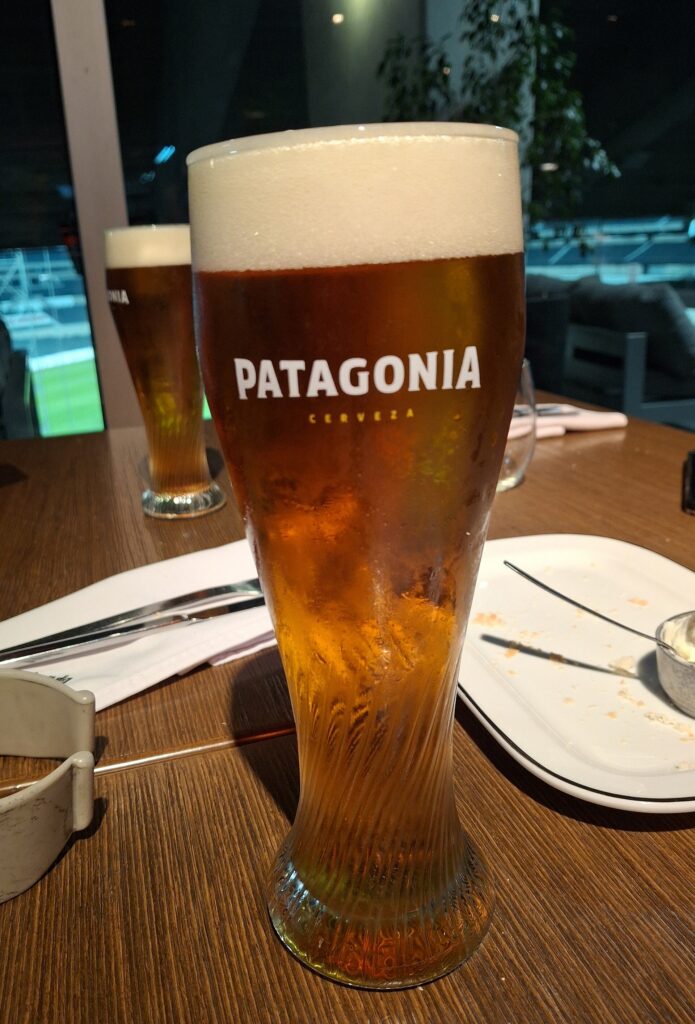
A well-attenuated malty amber lager with an interesting caramel or toast quality and restrained bitterness. Usually fairly well-attenuated, often with an adjunct quality. Smooth, easily-drinkable lager character.
When you get really deep into the BJCP guidelines and beer styles, there is a tendency to focus on certain styles, especially the ones you'll be judging a lot, while neglecting that others even exist. The International Lager category, seated squarely between Standard American Beer and Czech Lagers, typically doesn't get a lot of love. That makes sense when you consider the origin of that organization…homebrewers don't often set out to brew the best version of this style, they're more often after Imperial Stouts with more alcohol than some whiskeys and IPAs with about an acre of hops.
Forms of amber lager have been around for centuries. Despite being advanced in comparison to many other trades, beer production in the early period of the reinheitsgebot (and even before that) was far less consistent than it is today. Many of the dark lagers that would later be called dunkels were darker than today's dunkel, but many of them were also a bit lighter. Advances in malting practice came first to England, where the commercial beer industry was for centuries the most advanced in the world. When the scientifically-minded brewers Gabriel Sedlmeyer II, Anton Dreher, Josef Meindl, and Georg Lederer went to England to learn about brewing, they brought back their new-found knowledge of malting practices to Germany, which allowed for pale malts that didn't taste like smoke. Dreher went on to create the Vienna Lager, while Sedlmeyer went on to create the Marzen, both iconic examples of amber-colored lagers.
Enter Pilsner Urquell. The subsequent world domination enjoyed by pale lager wasn't spared on any country, and Adolphus Busch made certain to capitalize on it here in the states while recognizing the newly-arrived German immigrant community. Brewers the world over scrambled to keep up with the popularity of pale lager during the later half of the 1800s, just as the temperance movement took hold. The ensuing world wars left the beer industry unmoored, and what emerged in the 1940s was the beer popular with troops overseas, which was in effect dictated by the federal government during wartime.
Despite all of this, various versions of amber beer, and Amber Lager with them, survived the dark ages in the middle of the twentieth century. In the states, Anchor brewing held the torch with California Common, then passed it on with their early IPAs, which were amber, not pale. In Germany, meanwhile, the Marzen and Vienna Lager never really went away.
International Amber Lager is sort of our catch-all category for amber-colored lagers beers that don't quite fit into the Marzen or Vienna Lager groups. Though it's a rather unstriking category name, there are more than a few compelling beers in this category. Yuengling's Traditional Lager, the most often-cited commercial example, was reintroduced in the modern American market in 1987. Though that makes it less of a grandfather to the style than we might assume based on its ubiquity, it's still a great beer to have around when you want something easy-going with a bit of flavor. Brooklyn Lager from Brooklyn Brewery followed shortly after, and has a bit more American flair, with firmer bitterness and more American hop character. These are great beers for a variety of food, and they're a wonderful go-to for a party where you're not sure whether people are into craft beer (though if you're going to that kind of party, maybe you want to find a better party).
Varies by country, but generally represents an adaptation of the mass-market International Lager or an evolution of indigenous styles into a more generic product.
Amber
Light malt sweetness
Slight caramel or toast notes
Dry finish, light in both malt and hops
Overall Impression: A well-attenuated malty amber lager with an interesting caramel or toast quality and restrained bitterness. Usually fairly well-attenuated, often with an adjunct quality. Smooth, easily-drinkable lager character.
Aroma: Low to moderate malt aroma which can be grainy, with a very low to moderate caramel-sweet to toasty-malty aroma. Hop aroma can range from low to none with a mildly floral or spicy character. Clean lager profile. A slight DMS or corny aroma is acceptable. Appearance: Golden-amber to reddish-copper color. Bright clarity. White to off-white foam stand which may not last.
Flavor: Low to moderate malt profile which can vary from dry to grainy-sweet. Low to moderate levels of caramel and toastybready notes can be evident. Low to medium-low corny sweetness is optional, but not a fault. Hop bitterness is low to moderate, and hop flavor is low to moderate with a spicy, herbal, or floral character. The balance can be fairly malty to nearly even, with the bitterness becoming more noticeable but not objectionable. The bitterness level can increase if the malt character increases to match. Clean fermentation profile. Finish is moderately dry with a moderately malty aftertaste.
Mouthfeel: Light to medium body. Medium to high carbonation. Smooth; some examples can be creamy.
Comments: A wide spectrum of mass-market Amber lagers developed either independently in various countries, or describing rather generic amber beers that may have had more historical relevance but who eventually changed into an indistinguishable product in modern times.
History: Varies by country, but generally represents an adaptation of the mass-market International Lager or an evolution of indigenous styles into a more generic product.
Characteristic Ingredients: Two-row or six-row base malt. Color malts such as victory, amber, etc. Caramel malt adjuncts. European or American hops or a combination of both.
Style Comparison: Less well-developed malt flavor than a Vienna lager, often with an adjunct taste.
Vital Statistics: OG: 1.042 – 1.055 IBUs: 8 – 25 FG: 1.008 – 1.014 SRM: 7 – 14 ABV: 4.6 – 6.0%
Commercial Examples: Brooklyn Lager, Capital Winter Skal, Dos Equis Amber, Schell's Oktoberfest, Yuengling Lager
Less well-developed malt flavor than a Vienna lager, often with an adjunct taste.
Two-row brewers malt
Caramel or very light use of roasted malt
Corn or rice adjunct (no, nobody uses corn syrup)
European or American Hops
Various lager yeast
Brewers use a wide variety of techniques to make this style, since the style itself is quite varied. Some, mostly macro producers, use adjuncts, while others opt for all-malt grists. European and American hops are common, as is a mash schedule designed for drinkability. Ferment with lager yeast and condition for at least four weeks for drinkability.
At the Pub: Soft Pretzel and Mustard
Takeout: Fried chicken, french fries
Casual date: Pizza
Vermont Common
New: Bruce Springstein
Old: Ravel, Sheherazade
Brooklyn Lager, Capital Winter Skal, Dos Equis Amber, Schell's Oktoberfest, Yuengling Lager