Black Flannel Academy

American Amber Ale

amber-color ยท balanced ยท craft-style ยท new world ยท north-america ยท top-fermented
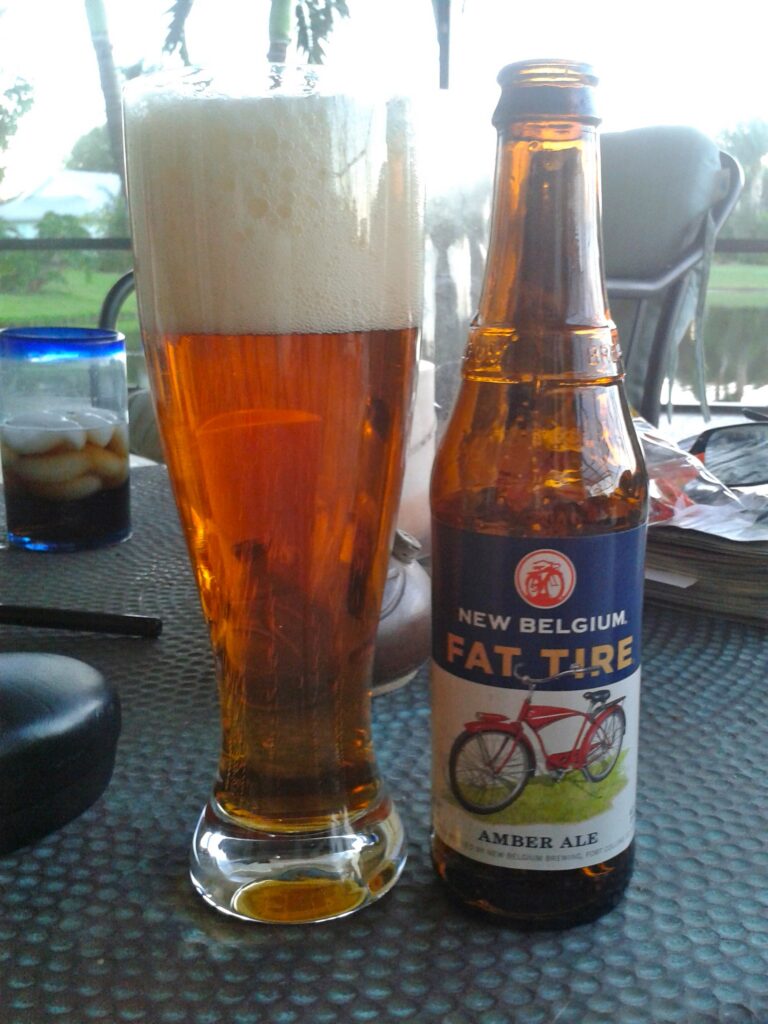
New Belgium Fat Tire Amber Ale
Pictured: New Belgium Fat Tire Amber Ale. Photo: Erik Cleves Kristensen / Wikimedia Commons ยท CC BY 2.0. Resized and cropped for display.

An amber, hoppy, moderate-strength American craft beer with a caramel malty flavor. The balance can vary quite a bit, with some versions being fairly malty and others being aggressively hoppy. Hoppy and bitter versions should not have clashing flavors with the caramel malt profile.

Color

10 – 17 SRM

Bitterness

25 – 40 IBU

Alcohol

4.5 – 6.2% ABV

Sweetness

Balance

Medium bitterness

History

Historical Development

One of the recent trends in beer marketing has been to advertise loudly how many pounds per barrel of hops or fruit brewers use in a beer. In the early 2000s, the arms race du jour was centered on the IBU, and how many we could possibly pack into a beer. Two important commonalities fall out of these two trends. The first is that craft beer is often about showcasing the extremes of brewing, which is sometimes pretty cool and many times borderline absurd (we do it too, though, so here's to the sweatshirt calling the flannel black). The second, is that a certain amount of beer culture centers around relatively vague numbers.

Almost every craft drinker knows at least something about the IBU (if you don't, stay tuned for the post on IPAs!), but there are other numbers that we cite in our blog that people may be less familiar with. One of those is SRM, which stands for Standard Reference Method, and quantifies the color of beer. In case you're curious, the math for this found by multiplying the log of the attenuation–the amount of light absorbed–that light with a 430 nanometer wavelength experiences when passing through one centimeter of beer. Okay enough of the math…let's get back to the beer.

Although each of these numbers is a testable, quantifiable measurement about beer, each of them is experienced subjectively. What one person describes as "sweet," someone else might describe as "balanced." Some people might be accustomed to beer with light bodies, so a medium-bodied beer could feel very full. Pale, amber, brown, dark, and black as descriptors for beer color fall into this category too, and the lines are pretty blurred when it comes to the difference between two of the earliest styles in American craft beer: Amber ale and Pale ale.

Even the BJCP guidelines, strictly stated as they are, have some overlap between these two styles. The top-range for SRM in American Pale is 10, which is the bottom of the range for Amber. We realize nobody except the geekiest of beer geeks (slowly raises hand) tries to guess SRM when they order a pint, but let's face it…if you've made it this far into a blog post, you've probably got a bit of beer geek in you too. American Amber and Pale Ale are a perfect example of styles that aren't black and white. The Amber was an outgrowth of Pale ales brewed starting in the early 1980s, so both of these beers feature American hops with citrusy, piney notes. Both also feature some caramel character, though in comparison pale has less than amber. If you order one of each in a flight from the same brewery, the Amber will of course be darker than the pale, and it will have a deeper, toastier, and more caramelly malt backbone. When we take a step back, though, this is a really cool example of grey areas between styles, and evolving concepts on beer in these two designations.

Whenever we try to aggregate and then quantify a moving target like beer–which changes brewer to brewer, region to region, and year to year–we end up trying to fit things into categories that might sometimes be okay to leave a bit vague. It's not at all that there isn't a distinction between amber and pale, but it's just not always as obvious as we make it seem with style guides.

Modern Evolution

A modern American craft beer style developed as a variation from American Pale Ales. Known simply as Red Ales in some regions, these beers were popularized in the hop-loving Northern California and the Pacific Northwest areas before spreading nationwide.

Classic characteristics

Appearance

Amber

Aroma

Caramelly malt backbone with notes of toast, grain, and bread crust

Citrus, pine, and resiny American hops

Flavor

Caramel maltiness, with notes of grain and bread crust

Medium bitterness

Mouthfeel

Medium body

Finish varies, some are malty and lingering, others are drier and cleaner

Flavor Profile Deep Dive

Service notes

BJCP designation

Overall Impression: An amber, hoppy, moderate-strength American craft beer with a caramel malty flavor. The balance can vary quite a bit, with some versions being fairly malty and others being aggressively hoppy. Hoppy and bitter versions should not have clashing flavors with the caramel malt profile.

Aroma: Low to moderate hop aroma with characteristics typical of American or New World hop varieties (citrus, floral, pine, resinous, spicy, tropical fruit, stone fruit, berry, or melon). A citrusy hop character is common, but not required. Moderately-low to moderately-high maltiness (usually with a moderate caramel character), which can either support, balance, or sometimes mask the hop presentation. Esters vary from moderate to none.

Appearance: Amber to coppery-brown in color. Moderately large off-white head with good retention. Generally quite clear, although dry-hopped versions may be slightly hazy.

Flavor: Moderate to high hop flavor with characteristics typical of American or New World hop varieties (citrus, floral, pine, resinous, spicy, tropical fruit, stone fruit, berry, or melon). A citrusy hop character is common, but not required. Malt flavors are moderate to strong, and usually show an initial malty sweetness followed by a moderate caramel flavor (and sometimes other character malts in lesser amounts). Malt and hop bitterness are usually balanced and mutually supportive, but can vary either way. Fruity esters can be moderate to none. Caramel sweetness and hop flavor/bitterness can linger somewhat into the medium to full finish.

Mouthfeel: Medium to medium-full body. Medium to high carbonation. Overall smooth finish without astringency. Stronger versions may have a slight alcohol warmth.

Comments: Can overlap in color with darker American pale ales, but with a different malt flavor and balance. Regional variations exist with some being fairly mainstream and others being quite aggressive in hopping. Stronger and more bitter versions are now split into the Red IPA style.

History: A modern American craft beer style developed as a variation from American Pale Ales. Known simply as Red Ales in some regions, these beers were popularized in the hop-loving Northern California and the Pacific Northwest areas before spreading nationwide.

Characteristic Ingredients: Pale ale malt, typically North American two-row. Medium to dark crystal malts. May also contain specialty grains which add additional character and uniqueness. American or New World hops, often with citrusy flavors, are common but others may also be used.

Style Comparison: Darker, more caramelly, more body, and generally less bitter in the balance than American Pale Ales. Less alcohol, bitterness, and hop character than Red IPAs. Less strength, malt, and hop character than American Strong Ales. Should not have a strong chocolate or roast character that might suggest an American brown ale (although small amounts are OK).

Vital Statistics: OG: 1.045 – 1.060 IBUs: 25 – 40 FG: 1.010 – 1.015 SRM: 10 – 17 ABV: 4.5 – 6.2%

Commercial Examples: Deschutes Cinder Cone Red, Full Sail Amber, Kona Lavaman Red Ale, North Coast Ruedrich's Red Seal Ale, Rogue American Amber Ale, Troegs HopBack Amber Ale

Brewers Association designation

American-Style Amber/Red Ale

Color: Copper to reddish-brown

Clarity: Chill haze is acceptable at low temperatures

Perceived Malt Aroma & Flavor: Medium-high to high maltiness with low to medium caramel character

Perceived Hop Aroma & Flavor: American-variety hop character may range from low to medium-low in aroma and flavor

Perceived Bitterness: Medium to medium-high

Fermentation Characteristics: Fruity esters, if present, are low. Diacetyl is usually absent in these beers but may be present at very low levels.

Body: Medium to medium-high

Original Gravity (Plato) 1.048-1.058 (11.9-14.3 Plato) – Apparent Extract/Final Gravity (Plato) 1.010-1.018 (2.5-4.6 Plato) – Alcohol by Weight (Volume) 3.5%-4.8% (4.4%-6.1%) – Bitterness (IBU) 25-45 – Color SRM (EBC) 11-18 (22-36 EBC)

Style comparison

Parent Categories

Darker, more caramelly, more body, and generally less bitter in the balance than American Pale Ales. Less alcohol, bitterness, and hop character than Red IPAs. Less strength, malt, and hop character than American Strong Ales. Should not have a strong chocolate or roast character that might suggest an American brown ale (although small amounts are OK).

Similar Styles from Other Classifications

Ingredients

Grain Bill

Two-row brewers malt

Caramel malts of various colors

American hops

Clean, American yeast

Brewing process

Mash Profile

A single infusion mash is traditional, and hopping rates vary depending on desired bitterness and aroma profile, but generally include significant late-hop and dry-hop additions for added aromatic punch. Fermented around 68F for a clean yeast profile.

Food pairings

At the Pub: Smash burger and fries

Takeout: Kabobs

Casual date: Pad thai

Desserts

Spirit pairings

Black Flannel Vermont Common

The soundtrack

New: My Brightest Diamond

Old: Grainger, Lincolnshire Posy

Keep exploring

Commercial Examples

Deschutes Cinder Cone Red, Full Sail Amber, Kona Lavaman Red Ale, North Coast Ruedrich's Red Seal Ale, Rogue American Amber Ale, Troegs HopBack Amber Ale

International Breweries

Beer Cocktail Recipe

Ambhatten

4 ounces American Amber Ale

2 ounces rye whiskey

1 ounce cherry juice

Maraschino cherry for garnish

Directions: Mix cherry juice and rye vigorously in a cocktail shaker with ice, then strain into a red wine glass. Top with Amber ale, spear maraschino cherry with cocktail spear, then place across rim of glass.

Return to all beer styles

Scroll to Top