Black Flannel Academy

Red IPA

amber-color ยท bitter ยท craft-style ยท high-strength ยท hoppy ยท ipa-family ยท north-america ยท specialty-family ยท top-fermented
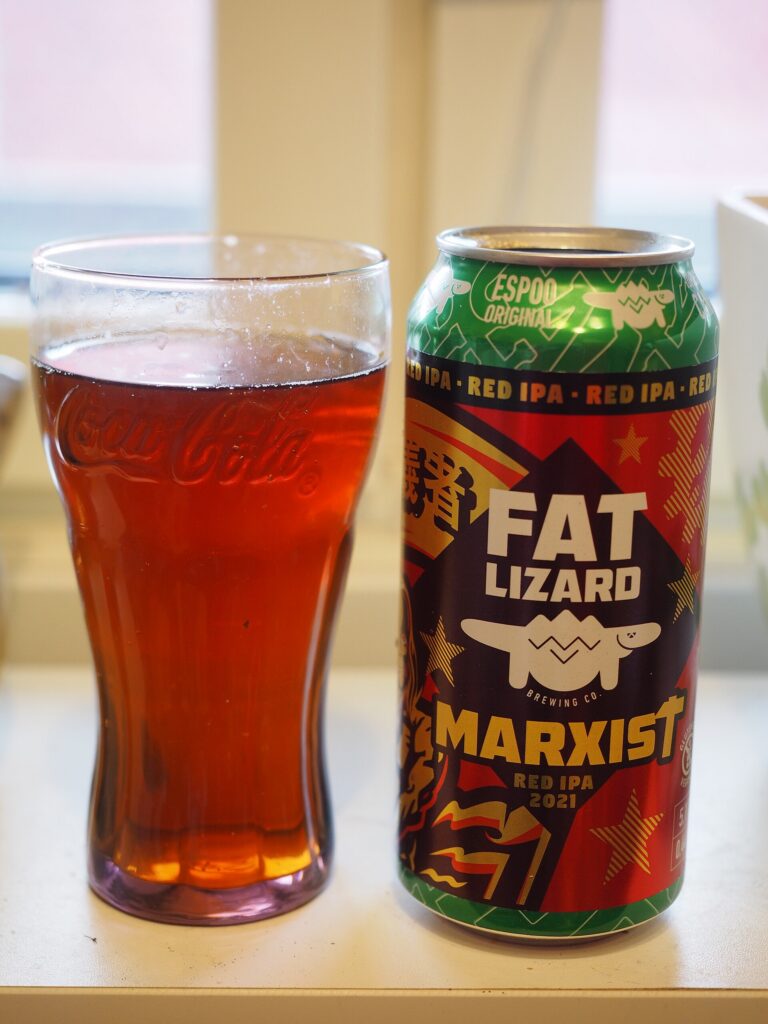
Fat Lizard Marxist Red IPA
Pictured: Fat Lizard Marxist Red IPA. Photo: JIP / Wikimedia Commons ยท CC BY-SA 4.0. Display crops and resized versions are available under the same license.

Hoppy, bitter, and moderately strong like an American IPA, but with some caramel, toffee, and/or dark fruit malt character. Retaining the dryish finish and lean body that makes IPAs so drinkable, a Red IPA is a little more flavorful and malty than an American IPA without being sweet or heavy.

Color

11 – 19 SRM

Bitterness

40 – 70 IBU

Alcohol

5.5 – 7.5% ABV

Sweetness

Medium malt sweetness

Balance

Medium to high bitterness

History

Historical Development

One of the threads of IPAs story on this side of the Atlantic is, like every other boozy drink, prohibition. In its younger years, the American beer scene was largely a reflection of the English scene that colonists were accustomed to. Though we think of IPA as a craft-oriented style in the US, its historical roots go much deeper than that (for the introduction of the craft IPA style in the late twentieth century, see our post on American IPA).

In the 1800s, there were several breweries-primarily located in the northeast-brewing an IPA including C.H. Evans & Sons in Hudson, NY, Frank Jones' Brewery in Boston, Christian Feigenspan Brewery in Newark, and Ballantine Brewery, also in Newark (Ballantine was founded in Albany in 1833, but moved to its Jersey location in 1840). As a side note, it's amazing to think that IPA, one of the styles most associated with modern craft, was booming in the US, others we often think of as part of the longer history of brewing like Vienna Lager, Marzen, and Helles hadn't been "invented" yet. Ballantine was the only IPA brewer to survive the dark ages of prohibition, and though it was brewed well into the craft movement, it was sold and altered to the point of being an unrecognizable skeleton of its once punchy hoppiness.

Still, earlier versions of Ballantine IPA inspired Fritz Maytag at Anchor and Ken Grossman at Sierra Nevada to create their first IPAs, which were Liberty Ale and Celebration Ale respectively. Liberty Ale is a bit closer to the historical IPA from England, at least in its color. Celebration Ale, on the other hand, was-and still is-an amber, beer showcasing both malt and American hops. The elevated bready, toasty malt backbone supports all of those fresh citrusy hop flavors, giving the beer a bit more sweetness and perceived balance than paler IPAs (this is, of course, an oversimplification of brewing…you can make a Pale IPA with more sweetness than an Amber IPA, and an Amber IPA on the drier side is equally possible).

As a beer descriptor, the word "pale" is a relative term. When brewers called the first versions of what would later be called India Pale Ales "pale," they were doing so in response to what had been a scene dominated by Porter for nearly a century. It's pretty cool, then, that our method for scientifically measuring beer color is similar to that concept. The Standard Reference Method (SRM) measures the amount of light (of 430 nanometer wavelength) absorbed by 1 centimeter of a liquid sample. In that way, it actually measures something like the relative "darkness" of wort or beer, much the way we think of pale as "not quite amber."

Though Sierra Nevada has brewed and released Celebration Ale every year since its 1981 debut, the Red IPA didn't really become a popular style at many breweries until the IPA boom of the 2000s. Just like many of the other specialty IPA styles, brewers experimented with other grists that could showcase American hops for variety in their offerings. We're doing the same at Black Flannel, where we brew a Red IPA that's inspired by the dry bodied and firmly bittered beers you'll find on the West Coast. We love this beer and the style because it sort of hits all the marks: toasty, caramelly, bready, and, most importantly (it is an IPA after all), hoppy AF.

Modern Evolution

A modern American craft beer style, based on American IPA but with the malt flavors of an American Amber Ale.

Classic characteristics

Appearance

Amber

Aroma

Assertively hop forward

Citrus, pine, resin, sometimes fruity

Toasty, caramelly malt backbone

Flavor

Medium to high bitterness

Medium malt sweetness

Clean, hoppy finish

Mouthfeel

Medium-light body

Clean, dry finish

Flavor Profile Deep Dive

Service notes

BJCP designation

Overall Impression: Hoppy, bitter, and moderately strong like an American IPA, but with some caramel, toffee, and/or dark fruit malt character. Retaining the dryish finish and lean body that makes IPAs so drinkable, a Red IPA is a little more flavorful and malty than an American IPA without being sweet or heavy.

Aroma: A moderate to strong fresh hop aroma featuring one or more characteristics of American or New World hops, such as tropical fruit, stone fruit, citrus, floral, spicy, berry, melon, pine, resinous, etc. Many versions are dry hopped and can have an additional fresh hop aroma; this is desirable but not required. Grassiness should be minimal, if present. A medium-low to medium malty-sweet aroma mixes in well with the hop selection, and often features caramel, toffee, toasty, and/or dark fruit character. Fruitiness from yeast may also be detected in some versions, although a neutral fermentation character is also acceptable. A restrained alcohol note may be present, but this character should be minimal at best. Any American or New World hop character is acceptable; new hop varieties continue to be released and should not constrain this style.

Appearance: Color ranges from light reddish-amber to dark reddish-copper. Should be clear, although unfiltered dryhopped versions may be a bit hazy. Medium-sized, off-white to cream-colored head with good persistence.

Flavor: Hop flavor is medium to very high, and should reflect an American or New World hop character, such as citrus, floral, pine, resinous, spicy, tropical fruit, stone fruit, berry, melon, etc. Medium-high to very high hop bitterness. Malt flavor should be medium-low to medium, and is generally clean but malty-sweet up front with medium-dark caramel, toffee, toasty and/or dark fruit malt flavors. The character malt choices and the hop selections should complement and enhance each other, not clash. The level of malt flavor should not adversely constrain the hop bitterness and flavor presentation. Low yeast-derived fruitiness is acceptable but not required. Dry to medium-dry finish; residual sweetness should be medium-low to none. The bitterness and hop flavor may linger into the aftertaste but should not be harsh. A very light, clean alcohol flavor may be noted in stronger versions.

Mouthfeel: Medium-light to medium body, with a smooth texture. Medium to medium-high carbonation. No harsh hopderived astringency. Very light, smooth alcohol warming not a fault if it does not intrude into overall balance.

Comments: Previously might have been a sub-genre of American Amber Ales or Double Red Ales, hoppier and stronger than the normal products, but still maintaining the essential drinkability by avoiding sweet flavors or a heavy body or finish.

History: A modern American craft beer style, based on American IPA but with the malt flavors of an American Amber Ale.

Characteristic Ingredients: Similar to an American IPA, but with medium or dark crystal malts, possibly some character malts with a light toasty aspect. May use sugar adjuncts. American or New World finishing hops with tropical, fruity, citrusy, piney, berry, or melon aspects; the choice of hops and character malts is synergistic – they very much have to complement each other and not clash.

Style Comparison: Similar to the difference between an American Amber Ale and an American Pale Ale, a Red IPA will differ from an American IPA with the addition of some darker crystal malts giving a slightly sweeter, more caramelly and dark fruit-based balance. A Red IPA differs from an American Strong Ale in that the malt profile is less intense and there is less body; a Red IPA still has an IPA balance and doesn't trend towards a barleywine-like malt character. A Red IPA is like a stronger, hoppier American Amber Ale, with the characteristic dry finish, medium-light body, and strong late hop character.

Vital Statistics: OG: 1.056 – 1.070 IBUs: 40 – 70 FG: 1.008 – 1.016 SRM: 11 – 19 ABV: 5.5 – 7.5%

Commercial Examples: Green Flash Hop Head Red Double Red IPA (double), Midnight Sun Sockeye Red, Sierra Nevada Flipside Red IPA, Summit Horizon Red IPA, Odell Runoff Red IPA

Brewers Association designation

  • Double Hoppy Red Ale
    • Color: Deep amber to dark copper/reddish-brown
    • Clarity: Chill haze is acceptable at low temperatures
    • Perceived Malt Aroma & Flavor: Medium to medium-high caramel malt character should be present in flavor and aroma. Low to medium biscuit or toasted malt character may also be present.
    • Perceived Hop Aroma & Flavor: Hop aroma is high, derived from any variety of hops. Hop flavor is high and balanced with other beer attributes.
    • Perceived Bitterness: High to very high
    • Fermentation Characteristics: Alcohol content is medium to high. Complex alcohol flavors may be present. Fruity esters are medium. Diacetyl should not be present.
    • Body: Medium to full
  • Original Gravity (ยฐPlato) 1.058-1.080(14.3-19.3 ยฐPlato) – Apparent Extract/Final Gravity (ยฐPlato) 1.015-1.024(3.9-6.1 ยฐPlato) – Alcohol by Weight (Volume) 4.9%-6.3%(6.1%-7.9%) – Bitterness (IBU) 45-80 – Color SRM (EBC) 10-17(20-34 EBC)

Style comparison

Parent Categories

Similar to the difference between an American Amber Ale and an American Pale Ale, a Red IPA will differ from an American IPA with the addition of some darker crystal malts giving a slightly sweeter, more caramelly and dark fruit-based balance. A Red IPA differs from an American Strong Ale in that the malt profile is less intense and there is less body; a Red IPA still has an IPA balance and doesn't trend towards a barleywine-like malt character. A Red IPA is like a stronger, hoppier American Amber Ale, with the characteristic dry finish, medium-light body, and strong late hop character.

Similar Styles from Other Classifications

Ingredients

Grain Bill

Two-row brewers malt

Caramel and/or darker malts for color

Lots of american hops

Clean, American yeast

Hops

  • Hop Rate: 40-60 IBU

Brewing process

Mash Profile

A single infusion mash in the lower range for saccharification is traditional to ensure good attenuation. Hopping rates vary depending on desired bitterness and aroma profile, but these beers include large bittering and late-hop, whirlpool, and dry-hop additions for added aromatic punch. Fermented around 68F for a clean yeast profile.

Food pairings

At the Pub: Scotch egg

Takeout: Pho

Casual date: Pizza

Desserts

Spirit pairings

Vermont Common

The soundtrack

New: Radiohead, Kid A

Old: Mendelssohn, Octet

Keep exploring

Commercial Examples

Green Flash Hop Head Red Double Red IPA (double), Midnight Sun Sockeye Red, Sierra Nevada Flipside Red IPA, Summit Horizon Red IPA, Odell Runoff Red IPA

International Breweries

Beer Cocktail Recipe

Radler

5 ounces Red IPA

3 ounces grapefruit juice

Grapefruit peel for garnish

Directions:

Pour grapefruit juice into a highball glass without ice, then top with IPA and garnish with grapefruit peel.

Return to all beer styles

Scroll to Top