
Genever (Non-GI)
A grain-and-juniper spirit inspired by genever traditions but made outside the relevant protected geographical framework. Depending on the proportion and character of grain distillate, it may be softly cereal-led, robustly malty or relatively light, with juniper and other botanicals providing a second aromatic layer.
Color
Maturation
Alcohol
Sweetness
Balance
History
Genever made outside a protected geographical designation draws on the same broad juniper-spirit heritage as protected jenever. Hasselt’s Jenever Museum traces that history through medicinal distillation, changing grain controls and later industrial production. The Non-GI heading is a modern classification distinction rather than an independent ancestral tradition. Its individual products may have local histories, but they should not be assigned a separate universal origin from jenever. Jenever Museum, Hasselt: historical account.
Classic characteristics
Appearance
Usually colourless when unaged; pale gold through amber with meaningful wood influence.
Aroma
Light to pronounced grain, bread, malt, juniper and supporting citrus or spice; proportions vary widely.
Flavor
Grain distillate and botanicals should form an integrated profile, with oak optional rather than expected.
Sweetness
Usually dry to gently sweet in impression; establish actual sweetening from documentation.
Mouthfeel
Light to substantial, often rounder where flavour-rich grain distillate has a larger role.
Finish
Medium to long in fuller examples; cereal, juniper and spice may alternate in prominence.
Flavor Profile Deep Dive
Judge malt-spirit and botanical integration without claiming protected-name eligibility from sensory resemblance. Investigate persistent unpleasant solvent-like, stale or sulfurous character in context. Do not diagnose a specific production error from one aroma; appropriate fermentation character and proof-related warmth are not automatic faults.
Service notes
Compare with one documented protected genever and a classic gin. Ask tasters to separate bread or cereal notes from juniper, then identify any oak contribution. Avoid calling the product “Dutch” merely because its recipe is inspired by Dutch traditions. Staff descriptions should name the real place of production and explain the inspiration without implying protected status.
Style parameters
| Parameter | Boundary or expectation |
|---|---|
| Base material | Grain distillate, juniper and optional neutral spirit |
| Bottled strength | No numerical ADI limit supplied for this entry; record the bottle and its legal designation. |
| Color and clarity | Usually colourless when unaged; pale gold through amber with meaningful wood influence. |
| Maturation | Optional wood resting; colour alone does not prove age or duration. |
| Additions | Botanicals and optional neutral spirit are within ADI's description; other permissions are jurisdiction-specific. |
Legal limits apply only to the named jurisdiction and identity. ADI entry conditions and typical sensory expectations are separate; a product example is not a universal range.
Cocktail connections
Browse published cocktails. Documented recipes, conditional style choices and development substitutions are labeled separately.
No established classic or recognized modern cocktail match was found for this specific style in the sources reviewed. This records a research gap, not proof that no cocktail exists. No neighboring style has been substituted to fill the space.
Style comparison
The grain component can make this style feel closer to a bridge between whiskey and gin than to a neutral-base London Dry. That is a sensory comparison, not a legal definition. It differs from protected Jenever principally in origin and conformity, which cannot be verified from flavour. A low-juniper profile is not automatically defective if the declared product concept supports it.
Ingredients
Grain distillate, juniper and optional neutral spirit
Production notes
ADI describes a grain base distilled with juniper and botanicals, optionally blended with neutral spirit or rested in wood. Its “Non-GI” qualifier is an educational competition distinction, not permission to use a protected name in every market. The protected Genever/Jenever/Genièvre family has specific geographic and production requirements; an analogous spirit made elsewhere needs an appropriate legal sales designation.
Commercial examples
No newly verified benchmark is designated in this revision. Select a documented qualifying expression before running a benchmark tasting.
Retained example and source context. ADI supplied source, S078. UK register of the protected name. No verified non-GI commercial benchmark is asserted; the matrix is a conditional interpretation of ADI's process definition.
Photo credit
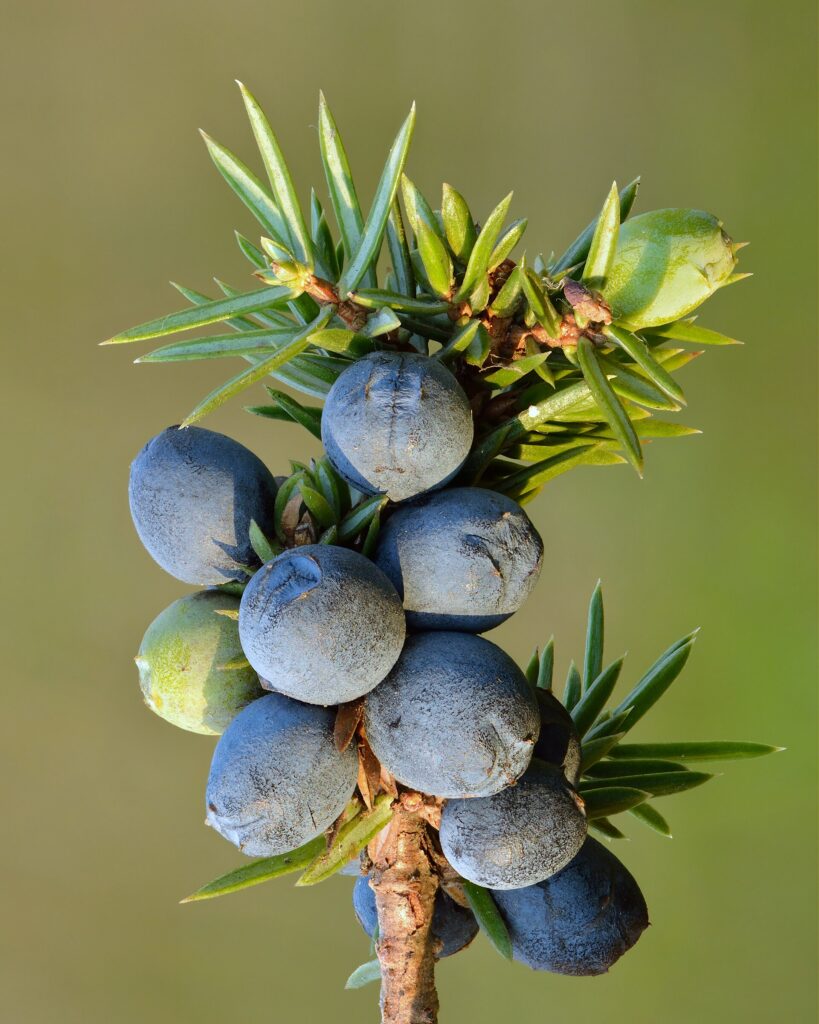
Ingredient or production reference: Juniper berries, a botanical used in genever. This photograph illustrates the raw material or process, not a bottle of this specific style. Photo: Ivar Leidus / Wikimedia Commons. CC BY-SA 4.0. Display resized; no other edits.
