Black Flannel Academy

Belgian IPA

bitter ยท craft-style ยท high-strength ยท hoppy ยท ipa-family ยท north-america ยท pale-color ยท specialty-family ยท top-fermented
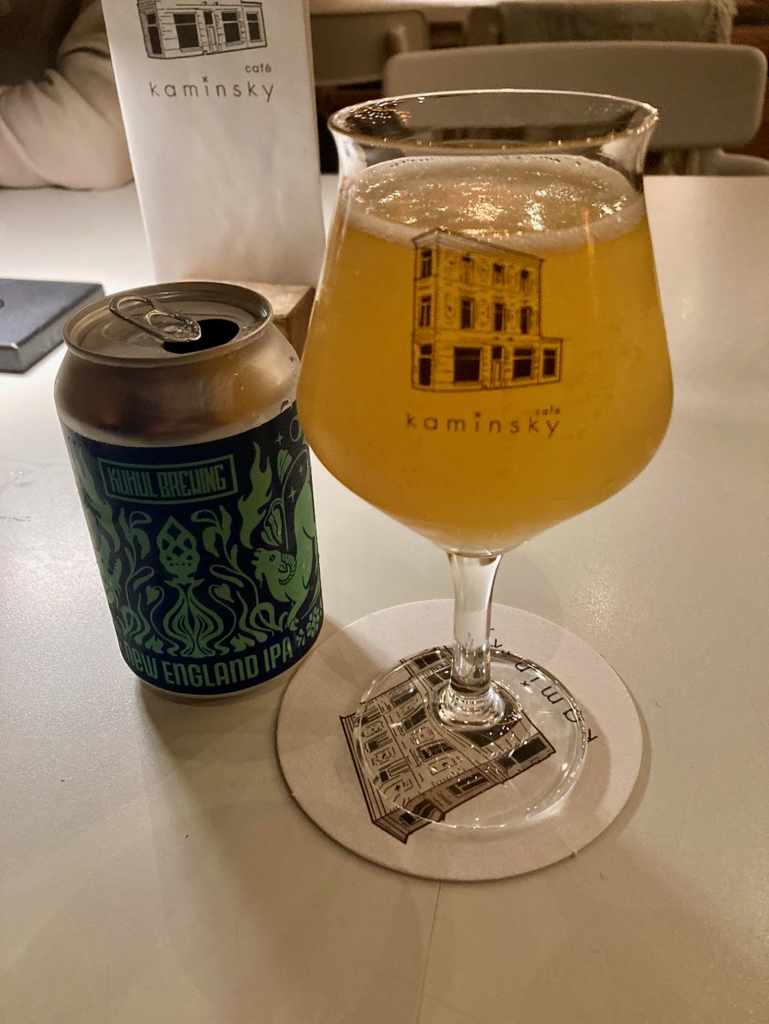
Belgian craft IPA served at Cafรฉ Kaminsky, Leuven
Pictured: Belgian craft IPA served at Cafรฉ Kaminsky, Leuven. Photo: Squirrelforest / Wikimedia Commons ยท CC BY-SA 4.0. Display crops and resized versions are available under the same license.

An IPA with the fruitiness and spiciness derived from the use of Belgian yeast. The examples from Belgium tend to be lighter in color and more attenuated, similar to a tripel that has been brewed with more hops. This beer has a more complex flavor profile and may be higher in alcohol than a typical IPA.

Color

5 – 15 SRM

Bitterness

50 – 100 IBU

Alcohol

6.2 – 9.5% ABV

Sweetness

Balance

Medium to high bitterness

History

Historical Development

One of the trends in beer during the past 20 years of craft boom has been tireless experimentation and the innovation that results from it. One of the results of that experimentation was Belgian IPA, which emerged in the early 2000s when homebrewers and small breweries alike experimented with different yeast treatments for their IPAs. During that period, we saw the emergence of Brown IPA, Rye IPA, and the Belgian IPA, which used the grain and hop bill typical for American IPA, with strong bittering and aroma additions using citrusy, piney, and fruity American hops, but also featured yeast typically used for Belgian Golden Strong or Tripel.

This is hardly the first time hops have been used in excess with a Belgian yeast, and certainly not the first time Belgian beers have been fairly bitter, though. As Michael Jackson points out in Great Beers of Belgium, most brewers choose something refreshing and hoppy while they sell beer-he suggests due to the pressure of marketing-with significantly less bitterness and hop aroma. Another interesting factor at play with any Belgian yeast is the bitterness contribution from yeast. Though Tripels have only 20-40 IBUs-a marker indicating the amount of iso-alpha acid in mg/L dissolved in wort or beer-it would be hard for anyone to characterize them as sweet. That's partially because they're brewed to attenuate fully, leaving little residual sweetness, but also because the yeast phenolics-which often taste and smell like white pepper and baking spices-give bitter impressions that we don't measure with IBUs. Bitter Belgian beer wasn't a complete revelation, then, in the early 2000s, but fermenting a wort that had the hop profile of an American IPA with a Belgian yeast was.

We've talked a lot about our roots as homebrewers on this blog, mostly because each of us on the brewing and distilling team at Black Flannel started by brewing at home in some capacity. More importantly, we're still driven by the same "what happens if we" spirit that homebrewers the world over emulate on every weekend brewday. That some of the beer styles we're seeing brewed all over the country came from homebrew experiments is a testament to that spirit, which we hope you'll find in Black Flannel's beer as well.

Modern Evolution

A relatively new style, started showing up in the mid 2000s. Homebrewers and microbreweries simply substituted Belgian yeast in their American IPA recipes. Belgian breweries added more hops to their tripel and pale ale recipes.

Classic characteristics

Appearance

Gold to Amber

Large, foamy head

Aroma

Hop forward

Citrus, tropical, pine, stone fruit

Sometimes spicy and floral

Significant Belgian yeast profile

Flavor

Medium to high bitterness

Belgian phenol and ester profile

Mouthfeel

Medium body

Clean finish from bitterness

Flavor Profile Deep Dive

Service notes

BJCP designation

Overall Impression: An IPA with the fruitiness and spiciness derived from the use of Belgian yeast. The examples from Belgium tend to be lighter in color and more attenuated, similar to a tripel that has been brewed with more hops. This beer has a more complex flavor profile and may be higher in alcohol than a typical IPA.

Aroma: Moderate to high hop aroma, often tropical, stone fruit, citrus or pine-like typical of American or New World hop varieties. Floral and spicy aromas are also found indicating European hops. Grassy aroma due to dry hopping may be present. Gentle, grainy-sweet malt aroma, with little to no caramel. Fruity esters are moderate to high and may include aromas of bananas, pears and apples. Light clove-like phenols may be noticeable. Belgian candi sugar-like aromas are sometimes present.

Appearance: Light golden to amber in color. Off-white head is moderate to large in size and has good retention. Clarity is fair to quite hazy in dry hopped examples.

Flavor: Initial flavor is moderately spicy and estery associated with Belgian yeast strains. Clove-like and peppery flavors are common. Banana, pear and apple flavors are also typical. Hop flavors are moderate to high in intensity and may reflect tropical, stone fruit, melon, citrusy, or piney American/New World varieties or floral and spicy Saazer-type hop flavors. Malt flavor is light and grainy-sweet, sometimes with low toasted or caramel malt flavor but not required. Bitterness is high and may be accentuated by spicy yeast-derived flavors. The finish is dry to medium-dry although some examples have a slight sweetness mixed with the lingering bitterness.

Mouthfeel: The body is medium to light and varies due to carbonation level and adjunct use. Carbonation level is medium to high. Some higher alcohol versions may be warming although this may not be readily apparent.

Comments: The choice of yeast strain and hop varieties is critical since many choices will horribly clash.

History: A relatively new style, started showing up in the mid 2000s. Homebrewers and microbreweries simply substituted Belgian yeast in their American IPA recipes. Belgian breweries added more hops to their tripel and pale ale recipes.

Characteristic Ingredients: Belgian yeast strains used in making tripels and golden strong ales. American examples tend to use American or New World hops while Belgian versions tend to use European hops and only pale malt.

Style Comparison: A cross between an American IPA/Imperial IPA with a Belgian Golden Strong Ale or Tripel. This style is may be spicier, stronger, drier and more fruity than an American IPA.

Vital Statistics: OG: 1.058 – 1.080 IBUs: 50 – 100 FG: 1.008 – 1.016 SRM: 5 – 15 ABV: 6.2 – 9.5%

Commercial Examples: Brewery Vivant Triomphe, Houblon Chouffe, Epic Brainless IPA, Green Flash Le Freak, Stone Cali-Belgique, Urthel Hop It

Brewers Association designation

  • American-Belgo-Style Ale
    • Color: Gold to black
    • Clarity: Chill haze is acceptable at low temperatures
    • Perceived Malt Aroma & Flavor: Typically low. Perception of specialty or roasted malts or barley can be very low to robust in darker versions.
    • Perceived Hop Aroma & Flavor: Medium to very high, exhibiting American-type hop aromas not usually found in traditional Belgian styles.
    • Perceived Bitterness: Medium to very high
    • Fermentation Characteristics: Fruity esters are medium to high. Belgian yeast attributes such as banana, berry, apple, coriander, spice and/or smoky-phenolic should be in balance with malt and hops. Diacetyl, sulfur and attributes typical of Brettanomyces should not be present.
    • Body: Medium-low to medium
    • Additional notes: American-Belgo-Style Ales are either 1) non-Belgian beer types portraying the unique characters imparted by yeasts typically used in big, fruity Belgian-style ales, or 2) defined Belgian-style beers displaying the hallmark attributes typical of American variety hops. These beers are unique unto themselves.
  • Original Gravity (ยฐPlato) Varies with style – Apparent Extract/Final Gravity (ยฐPlato) Varies with style – Alcohol by Weight (Volume) Varies with style – Bitterness (IBU) Varies with style – Color SRM (EBC) Varies with style

Style comparison

Parent Categories

A cross between an American IPA/Imperial IPA with a Belgian Golden Strong Ale or Tripel. This style is may be spicier, stronger, drier and more fruity than an American IPA.

Similar Styles from Other Classifications

Ingredients

Grain Bill

Two-row brewers malt

Various low color malts

American hops

Expressive Belgian Yeast

Brewing process

Mash Profile

A single infusion mash is traditional, and hopping rates vary depending on desired bitterness and aroma profile. Spices can be added on either the hot or cold side. Fermented at various temperatures depending on desired yeast profile: higher for more fruitiness, lower for a cleaner profile.

Food pairings

At the Pub: Endive Salad

Takeout: Mexican

Casual date: Mediterranean

Desserts

Spirit pairings

Dutch Soul

The soundtrack

New: The Bad Plus

Old: George Crumb – Music for a Summer Evening

Keep exploring

Commercial Examples

Brewery Vivant Triomphe, Houblon Chouffe, Epic Brainless IPA, Green Flash Le Freak, Stone Cali-Belgique, Urthel Hop It

International Breweries

Beer Cocktail Recipe

Belgiamerussian

4 ounces Belgian IPA

1.5 ounces Dutch Soul

.5 ounce simple syrup

Juice from half a lime

Grated lime zest for garnish

Pour lime juice, simple syrup, and Genever into a cocktail mixing glass, fill with ice, then stir. Strain into a martini glass, top aggressively with Belgian IPA to produce a nice foam head, then garnish with grated lime zest.

Return to all beer styles

Scroll to Top