Black Flannel Academy

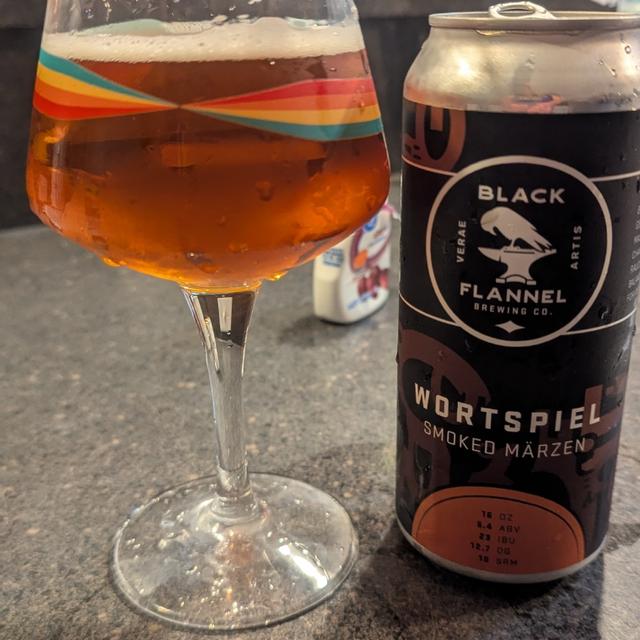
Rauchbier | Wortspiel

amber-color · amber-lager-family · bottom-fermented · central-europe · lagered · Malty · smoke · standard-strength · Traditional style

The Rauchbier is a smoked lager that showcases the complex interplay between beechwood smoke character and malt sweetness. The style represents a living connection to pre-industrial brewing, when all beer was smoked from wood-fired kilns, and Bamberg’s resistance to change kept the tradition alive.

Color

12 – 22 SRM

Bitterness

20 – 30 IBU

Alcohol

4.8 – 6% ABV

Sweetness

Beechwood smoke character interplays with Märzen malt sweetness.

Balance

Moderate hop bitterness provides balance.

History

Historical Development

Before modern kilns and coke-fired systems, all beer was smoked. Historically, grain dried over wood fires absorbed significant smoke character, making smoky flavors nearly universal in beer. As brewing technology advanced and coal/coke kilns became standard in England and other regions, smoke character largely disappeared from beer. Bamberg, Germany, remained an exception—a region that resisted change and continued smoking malt over beechwood, maintaining the ancient tradition into the modern era.

Geographic Origin

Bamberg, Germany (specifically Franconia/Bamberg region) is the definitive home of Rauchbier. The Schlenkerla and Spezial breweries are the most famous Rauchbier producers, brewing versions that have remained largely unchanged for generations.

Modern Evolution

Contemporary Rauchbier production maintains the traditional beechwood-smoking approach, though production has expanded beyond Bamberg as craft brewers worldwide have discovered the style. The core tradition—Märzen base smoked with beechwood—remains consistent across producers.

Classic characteristics

Appearance

Brown to dark brown color, ranging from amber-brown to deep brown depending on malt selection. Clear with good clarity typical. Tan to brown head with good retention.

Aroma

Pronounced smoky character dominates, with notes of bacon, ham, or smoked meat. Behind the smoke, subtle malt sweetness and slight hop aroma. The smoke is immediately apparent and quite strong—this is not a subtle smoked beer.

Flavor

Beechwood smoke character interplays with Märzen malt sweetness. Notes of bacon, ham, and smoked meat blend with caramel malt, slight bread crust, and warming alcohol. The smoke is prominent but not overwhelming—it should integrate with the malt rather than dominating it. Moderate hop bitterness provides balance.

Mouthfeel

  • ABV: 4.8-6.0%
  • Body: Medium to full
  • Carbonation: Moderate
  • Finish: Warming, smoke lingering

Flavor Profile Deep Dive

Primary Flavors

Beechwood smoke character (bacon, ham, smoked meat notes) balanced against Märzen malt sweetness (caramel, bread crust). The smoke should enhance the malt rather than dominate it.

Secondary Flavors

Slight hop bitterness providing balance, subtle roast character from darker malts, warming alcohol.

Aftertaste

Lingering smoke character with malt sweetness fading to dry. The smoke lingers pleasantly in the finish.

Service notes

Serve at 45-50°F in a standard lager glass. This beer pairs excellently with smoked meats and hearty German food. The smoke character opens up and integrates as the beer warms.

BJCP designation

Overall Impression: An elegant, malty German amber lager with a balanced, complementary beechwood smoke character. Toasty-rich malt in aroma and flavor, restrained bitterness, low to high smoke flavor, clean fermentation profile, and an attenuated finish are characteristic.

Aroma: Blend of smoke and malt, with a varying balance and intensity. The beechwood smoke character can range from subtle to fairly strong, and can seem smoky, woody, or baconlike. The malt character can be low to moderate, and be somewhat rich, toasty, or malty-sweet. The malt and smoke components are often inversely proportional (i.e., when smoke increases, malt decreases, and vice versa). Hop aroma may be very low to none. Clean lager fermentation character.

Appearance: This should be a very clear beer, with a large, creamy, rich, tan- to cream-colored head. Medium amber/light copper to dark brown color.

Flavor: Generally follows the aroma profile, with a blend of smoke and malt in varying balance and intensity, yet always complementary. Marzen-like qualities should be noticeable, particularly a malty, toasty richness, but the beechwood smoke flavor can be low to high. At higher levels, the smoke can take on a ham- or bacon-like character, which is acceptable as long as it doesn’t veer into the greasy range. The palate can be somewhat malty, rich, and sweet, yet the finish tends to be medium-dry to dry with the smoke character sometimes enhancing the dryness of the finish. The aftertaste can reflect both malt richness and smoke flavors, with a balanced presentation desirable. Moderate, balanced, hop bitterness. Moderate to none hop flavor with spicy, floral, or herbal notes. Clean lager fermentation character. Harsh, bitter, burnt, charred, rubbery, sulfury or phenolic smoky characteristics are inappropriate.

Mouthfeel: Medium body. Medium to medium-high carbonation. Smooth lager character. Significant astringent, phenolic harshness is inappropriate.

Comments: Literally “smoke beer” in German. The intensity of smoke character can vary widely; not all examples are highly smoked. Allow for variation in the style when judging. Other examples of smoked beers are available in Germany based on styles such as Dunkles Bock, Weissbier, Dunkel, Schwarzbier, and Helles, including examples such as Spezial Lager; these should be entered in the Classic Style Smoked Beer category. This description specifically refers to the smoked Marzen version.

History: A historical specialty of the city of Bamberg, in the Franconian region of Bavaria in Germany. Beechwood-smoked malt is used to make a Marzen-style amber lager. The smoke character of the malt varies by maltster; some breweries produce their own smoked malt (rauchmalz).

Characteristic Ingredients: German Rauchmalz (beechwood-smoked Vienna-type malt) typically makes up 20-100% of the grain bill, with the remainder being German malts typically used in a Marzen. Some breweries adjust the color slightly with a bit of roasted malt. German lager yeast. German or Czech hops.

Style Comparison: Like a Marzen with but with a balanced, sweet, smoky aroma and flavor and a somewhat darker color.

Vital Statistics: OG: 1.050 – 1.057 IBUs: 20 – 30 FG: 1.012 – 1.016 SRM: 12 – 22 ABV: 4.8 – 6%

Commercial Examples: Eisenbahn Rauchbier, Kaiserdom Rauchbier, Schlenkerla Rauchbier Marzen, Spezial Rauchbier Marzen Victory Scarlet Fire Rauchbier

Brewers Association designation

  • Bamberg-Style Maerzen Rauchbier
  • Color: Pale to light brown
  • Clarity: Appearance should be clear. Chill haze should not be present
  • Perceived Malt Aroma & Flavor: Sweet toasted malt aroma should be present. Medium-low to medium toasted malt sweetness should be present. Aroma and flavor of smoked beechwood ranges from very low to medium. Smoke flavors should be smooth, without harshness. Aroma should strike a balance between malt, hop and smoke.
  • Perceived Hop Aroma & Flavor: Hop aroma and flavor is very low to low, derived from noble-type hops.
  • Perceived Bitterness: Low to medium
  • Fermentation Characteristics: Fruity esters and diacetyl should not be present
  • Body: Full
  • Original Gravity (°Plato) 1.050-1.060(12.4-14.7 °Plato) – Apparent Extract/Final Gravity (°Plato) 1.012-1.020(3.1-5.1 °Plato) – Alcohol by Weight (Volume) 4.0%-4.7%(5.1%-6.0%) – Bitterness (IBU) 18-25 – Color SRM (EBC) 4-15(8-30 EBC)

Style comparison

Parent Categories

  • German Specialty Lagers
  • Märzen (the base beer)

Similar Styles

  • Märzen (non-smoked base)
  • English Brown Ale (similar color, no smoke)
  • Smoke Ale (Rogue interpretation)

Ingredients

Grain Bill

Smoked malt (beechwood-smoked Märzen malt) forms the base, with smaller amounts of pale or Munich malt. The proportion of smoked malt significantly affects smoke intensity—higher proportions create stronger smoke character.

Hops

Moderate hopping (20-30 IBU) using noble varieties (Hallertau, Tettnang). Hops should provide balance without overwhelming the smoke-malt interplay.

Yeast

Lager yeast fermented at cool temperatures. The yeast should remain clean to allow smoke and malt character to shine.

Water Profile

Soft to moderately hard water. No particular mineral emphasis, though slightly sulfate-accented water may complement the smoky character.

Brewing process

Mash Profile

Single infusion mash in the mid-temperature range for good fermentability and malt extraction.

Fermentation

Cool lager fermentation (50-55°F) to produce a clean, crisp lager character that supports rather than competes with the smoke and malt sweetness.

Food pairings

Smash Burger and Fries
Takeout: Kabobs
Barbecue: Beer can chicken with spicy rub

Cheese

Smoked cheeses, aged hard varieties, sharp cheddar

Meat & Seafood

Smoked meats, barbecue, grilled sausages, smoked fish, heavy meat dishes

Desserts

Smoked chocolate preparations, caramel-based desserts

Spirit pairings

Vermont Common

The soundtrack

Contemporary: Rage Against the Machine
Classical: Liszt, Mephisto Waltz

Keep exploring

Commercial Examples

Schlenkerla Rauchbier, Spezial Rauchbier, Bamberg Rauchbier, Aecht Schlenkerla Märzen (the original), Rogue Smoke Ale (American variant), Black Flannel Brewing Wortspiel

Black Flannel Notes

Brewing Approach

Rauchbier brewers face a critical decision: the proportion of smoked malt to pale/Munich malt. Bamberg producers typically use a higher proportion (70-80% smoked malt), creating pronounced smoke character. Brewers seeking lighter smoke profiles can adjust the ratio downward. Beechwood smoke is critical—other smoke sources (applewood, hickory) produce distinctly different character.

Tasting Notes

Rauchbier connects modern drinkers to beer\’s ancient past—a living museum of brewing tradition. The smoke character, often intimidating to first-time drinkers, integrates beautifully with proper malt sweetness and proves surprisingly food-friendly.

Scroll to Top